Which Wood Is Best for Wooden Cot? A Practical Guide Before You Buy
Buying a wooden cot looks easy.
You walk into a store, see a beautiful bed, check the price, maybe lie down for a few seconds, and make a decision.
The problem is that what you see outside tells you almost nothing about what’s actually inside.
A cot may have a rich “teak finish,” premium-looking polish, and elegant design. But that doesn’t automatically mean it is made from teak wood.
In fact, many buyers have no idea what wood has been used because once a cot is polished, identifying the base material becomes extremely difficult.
So, if you’re wondering which wood is best for cot, this guide will help you make an informed decision and avoid expensive mistakes.
First Things First: Why Wood Choice Matters
A wooden cot is expected to last for years. Sometimes decades.
Unlike a dining chair or coffee table, a cot handles daily weight, movement, and continuous use.
The wood used affects:
- Durability
- Structural strength
- Resistance to bending and cracking
- Termite resistance
- Long-term stability
- Resale value
Choosing the wrong material can lead to squeaking, sagging, cracks, or structural failure much sooner than expected.
Quick Comparison of Common Woods Used for Cots
| Wood Type | Durability | Stability | Recommended for Cots? |
| Assam Teak | Excellent | Excellent | Highly Recommended |
| Oak | Excellent | Very Good | Highly Recommended |
| Ash | Very Good | Very Good | Recommended |
| Rosewood | Excellent | Excellent | Highly Recommended |
| Sheesham | Moderate | Moderate | Use with caution |
| Mango Wood | Moderate | Moderate | Not ideal for long-term use |
| Unknown / Mixed Wood | Unpredictable | Unpredictable | Avoid |
This table simplifies things, but let’s go deeper.
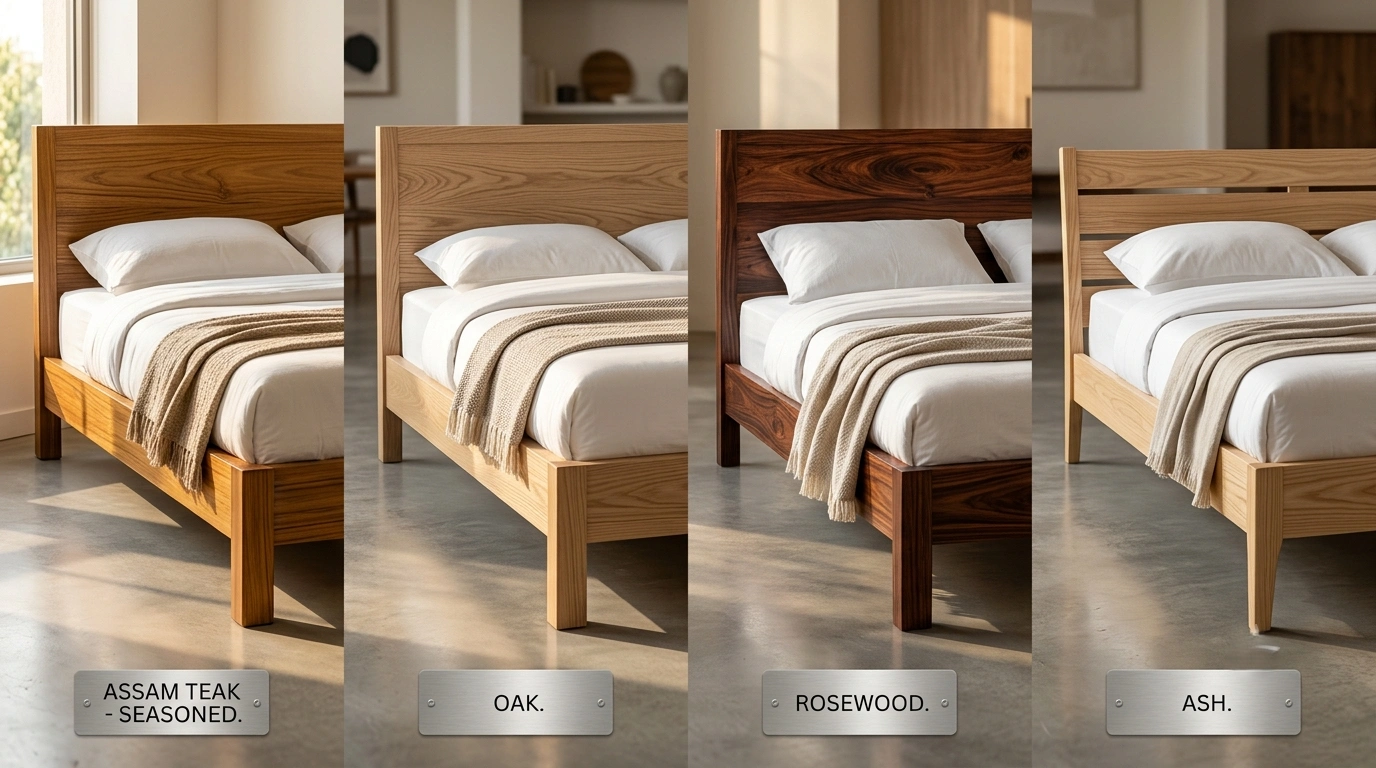
Assam Teak: One of the Best Woods for Wooden Cots
If durability is the priority, Assam teak is difficult to beat.
It is naturally strong, stable, and handles Indian climatic conditions well. It also has good resistance to termites when properly seasoned.
Most importantly, teak remains dimensionally stable over time. That means fewer chances of warping, bending, or developing structural issues.
This is one reason why many premium furniture manufacturers prefer teak for beds and cots.
Yes, it costs more initially. But when spread over 15 or 20 years of use, it often turns out to be a better investment.
Oak and Ash: Strong and Reliable Choices
Oak has been used worldwide for furniture for generations.
It offers:
- High strength
- Excellent load-bearing capacity
- Attractive grain patterns
Ash wood is another excellent option, especially for contemporary furniture.
Ash combines strength with flexibility, making it suitable for modern customised cot while still maintaining structural integrity.
Both oak and ash perform well when properly seasoned and manufactured.
Rosewood: Premium and Extremely Durable
Rosewood has long been associated with premium furniture.
It is dense, strong, and ages beautifully.
A well-made rosewood cot can easily last for decades.
The only downside is cost. Genuine rosewood furniture tends to be expensive because of material availability and quality.
For buyers seeking longevity, however, it remains one of the best wood for cot choices.
What About Sheesham and Mango Wood?
Sheesham and mango wood are widely used in the market today.
They are popular largely because they help keep prices lower.
However, for a product like a cot that experiences daily stress, they may not always be the ideal choice for long-term durability.
This does not mean every sheesham or mango wood bed is poor.
But buyers should understand that these woods generally do not offer the same durability, stability, or lifespan as premium hardwoods like teak, oak, or rosewood.
When comparing prices, always compare the actual wood species being used.
A significantly cheaper cot usually has a reason.
Beware of Terms Like “Teak Finish” or “Teak Colour”
This is where many buyers get misled.
Words such as:
- Teak finish
- Walnut finish
- Teak colour
- Oak finish
describe only the appearance.
They do not necessarily indicate the actual wood.
A cot made from low-cost wood, mixed wood, or even packing wood can be polished and finished to resemble teak.
Once polished, identifying the base material becomes difficult for most customers.
So instead of asking:
“What finish is this?”
Ask:
“What wood has actually been used?”
And ask for proof if necessary.
Questions Every Buyer Should Ask Before Purchasing a Cot
Before finalizing a purchase, ask:
| Question | Why It Matters |
|---|---|
| What wood species is used? | Determines durability |
| Is the wood fully seasoned? | Prevents future warping |
| Can I see unfinished material samples? | Verifies authenticity |
| What is the thickness of the members? | Indicates structural strength |
| Can I inspect the internal structure? | Ensures build quality |
Most customers never ask these questions.
They simply compare photographs and prices.
The Biggest Mistake Buyers Make
People often compare only:
- Design
- Polish
- Price
Very few compare the internal structure or actual material.
Unfortunately, furniture is one category where poor materials can easily be hidden under excellent finishing.
At Suhaus, custom furniture in Bangalore customers are encouraged to inspect their custom cot during production. They can see the frame, reinforcement, wood species, and internal construction before final finishing.
That transparency helps customers understand exactly what they are paying for.
Because a cot should not just look premium. It should be premium inside as well.
Which Wood Is Best for Double Cot in Bangalore?
For Bangalore homes, Assam teak, oak, ash, and rosewood are among the best choices.
Bangalore’s climate is relatively moderate, but proper seasoning and construction remain critical.
A well-built double cot using these materials can provide decades of reliable use.
FAQ Section
Which wood is best for cot?
Assam teak, oak, rosewood, and ash are among the best woods for cots because of their durability and long-term stability.
What is the best wood for cot in India?
Teak is widely regarded as one of the best choices in India due to its strength, termite resistance, and longevity.
Is sheesham wood good for a cot?
Sheesham can be used for cots, but premium hardwoods such as teak and oak generally offer better long-term durability.
Which wood is best for a double cot in Bangalore?
Assam teak, oak, ash, and rosewood are excellent choices when looking for the best wood for double cot in bangalore. .
How can I identify the wood used in a cot?
Once polished, it can be difficult to identify the wood visually. Always ask the manufacturer about the wood species and request material samples or production-stage inspection.
Takeaway
The best wood for wooden cot design is not determined by polish, colour, or showroom appearance.
Focus on the actual wood species, seasoning quality, and internal construction. Premium hardwoods such as Assam teak, oak, ash, and rosewood generally provide better durability and long-term value.
And remember, terms like “teak finish” describe only the appearance, not necessarily the material itself. Always ask what lies beneath the polish.