How to Customize Your Cot Size for the Bedroom Without Getting It Wrong
Choosing the right cot size for a bedroom is more important than most people realize. A poorly sized cot can restrict movement, block storage access, and make the entire room feel cramped and uncomfortable.
In modern homes where space is limited, selecting the correct cot bed size is essential for comfort, functionality, and efficient layout planning. Standard sizes may not always suit every room layout.
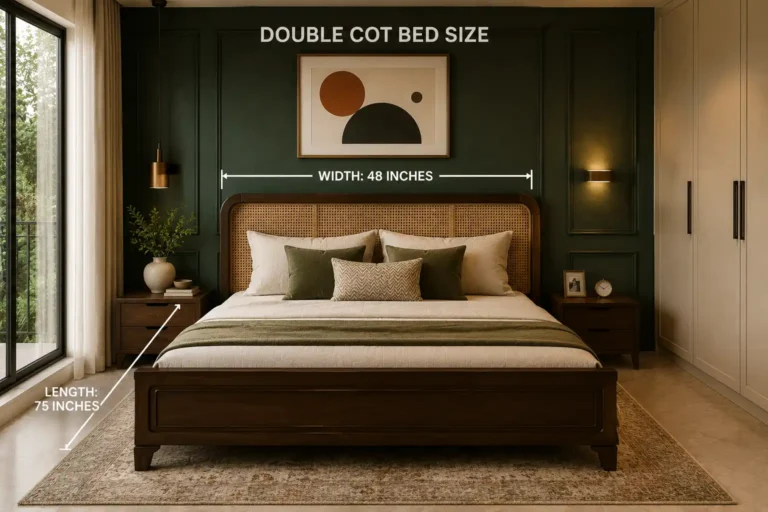
Cot size for a bedroom refers to the length, width, and height of a bed designed to fit within a room while allowing enough space for movement, furniture access, and daily usability.
This guide explains how to choose the ideal cot size, when to customize it, and how to avoid common mistakes.
 What Is the Best Cot Size for a Bedroom?
The best cot size for a bedroom depends on:
-
- Room dimensions
-
- Furniture placement
-
- Movement space
-
- User comfort
A cot should allow at least 2 to 2.5 feet of walking space around it while fitting comfortably within the room layout.
Standard Cot Size Chart for Bedrooms
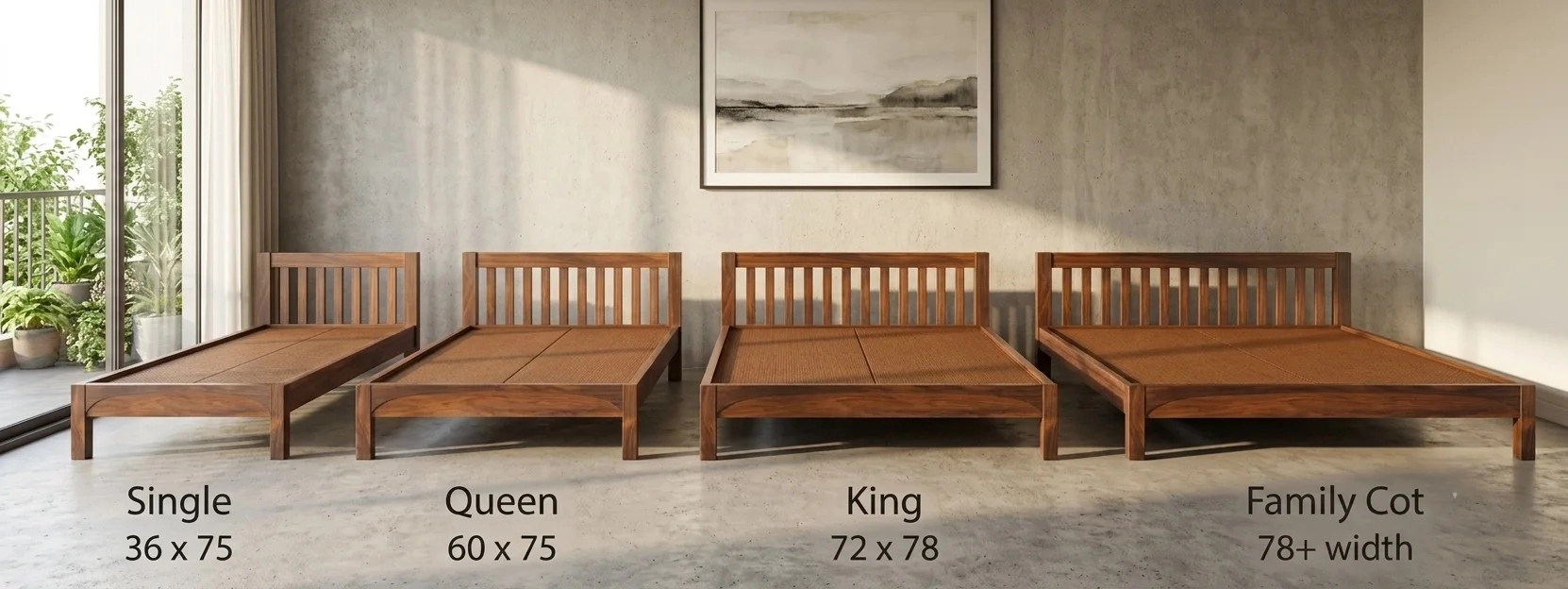
Here’s a commonly used cot size chart:
| Type | Typical Size (inches) | Best For |
| Single | 36 x 75 | One person, compact rooms |
| Queen | 60 x 75 | Couples, medium rooms |
| King | 72 x 78 | Larger bedrooms |
| Family Cot | 78+ width | Families with kids |
These sizes act as a starting point.
In most homes, a queen size cot is the most practical choice as it balances comfort and space, while king size cots are better suited for larger bedrooms with sufficient movement space.
Ideal Cot Size Based on Room Dimensions
Choosing the right cot becomes easier when you match it with your room size:
| Room Size | Recommended Cot Size |
| 8×10 ft | Single or compact custom cot |
| 10×10 ft | Queen size (space optimized) |
| 10×12 ft | Queen or compact king |
| 12×12 ft+ | King size |
Always adjust these recommendations based on wardrobe placement and walking space.
How to Choose the Right Cot Size for Your Room
Instead of selecting a standard size first, analyze your room layout carefully.
Key Factors to Consider:
-
- Entry and walking path
-
- Wardrobe door clearance
-
- Space for side tables
-
- Window placement
Important Rule:
Your cot should fit your room — not the other way around.
For better planning, refer to a simple bedroom layout or spacing diagram to visualize placement before finalizing dimensions.
 Why Custom Cot Size Is Often the Better Choice
Standard sizes do not work for every bedroom. A custom cot size helps optimize both comfort and available space.
You can adjust:
-
- Length (for taller users)
-
- Width (based on room size)
-
- Height (for comfort and storage)
-
- Headboard thickness
-
- Storage type and depth
Real Example:
In a 10×10 ft bedroom, reducing the cot width by even 3–4 inches can create enough space for a side table or improve walking clearance significantly.
Customization allows you to design a cot that works perfectly with your room instead of forcing adjustments later.
Why Cot Height Matters
Most people focus only on length and width, but cot height plays a major role in daily comfort.
-
- Low cots → modern appearance, but harder to get up
-
- High cots → easier usability, but can feel bulky
Ideal cot height:
16 to 24 inches (including mattress)
If you add storage or a hydraulic system, the height will increase automatically, so it should be planned in advance.
How Much Space Should You Leave Around a Cot?
This is one of the most important factors in bedroom planning.
Ideal spacing guidelines:
-
- Minimum 2 to 2.5 feet walking space on at least one side
-
- Enough clearance for wardrobe doors
-
- Space near the foot of the bed
Practical Insight:
-
- In small bedrooms → prioritize walking space on one side
-
- In larger bedrooms → maintain balanced space on both sides
If movement is restricted, the room will feel smaller even if the cot technically fits.
How Storage Impacts Cot Size and Space
Adding storage significantly changes how the cot functions.
Types of Storage:
Hydraulic Storage
-
- Easy full access
-
- No side clearance needed
-
- Requires lifting space
Drawer Storage
-
- Needs side clearance
-
- Not ideal for tight rooms
No Storage
-
- Cleaner and minimal
-
- Creates more open space
Decision Tip:
In compact rooms, cot with storage is usually more practical, while larger rooms can accommodate drawer storage easily.
Common Mistakes When Choosing Cot Size
Avoid these common errors:
-
- Choosing the largest size just because it fits
-
- Ignoring headboard thickness while measuring
-
- Not matching mattress size properly
-
- Blocking wardrobe or door movement
-
- Forgetting space for side tables
These problems usually become noticeable only after installation, when changes are difficult.
When Should You Customize Your Cot Size?
Customization is the better option if:
-
- Your room layout is irregular
-
- You need specific storage solutions
-
- You are taller than average
-
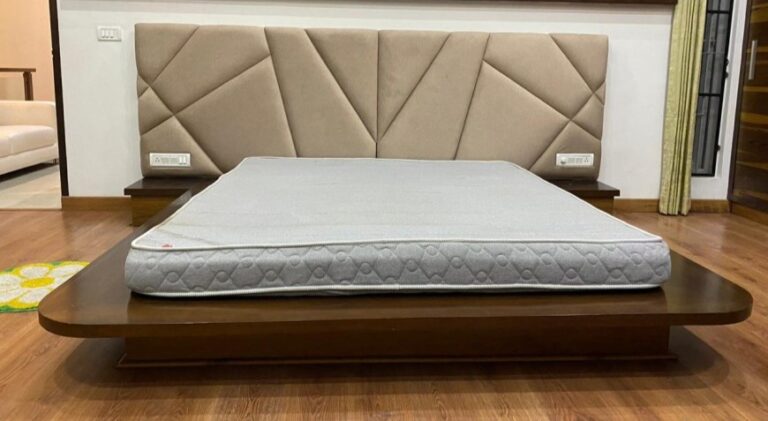
- You want a unique headboard design
-
- Space optimization is important
Even one of these factors makes customization a practical choice.
Why Build Quality Matters More Than Size
Even the perfect cot size will not perform well if the build quality is poor.
Focus on:
-
- Frame strength
-
- Internal support structure
-
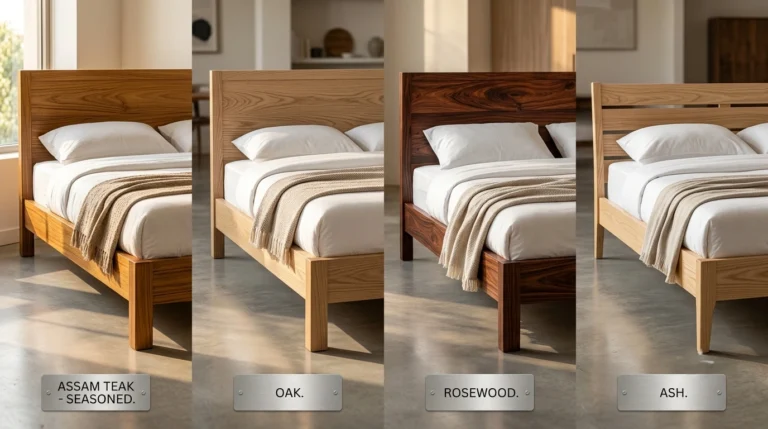
- Material quality
-
- Joinery and reinforcement
A well-built cot ensures durability, stability, and long-term comfort.
If you’re planning a custom solution, exploring different cot designs and size options can help you make a more informed decision before finalizing.
Expert Tip for Choosing the Right Cot Size
Interior designers recommend finalizing the cot size only after planning wardrobe placement and walking paths. This prevents layout conflicts and ensures better usability of the entire bedroom.
Quick Summary
-
- Measure your room before selecting cot size
-
- Maintain at least 2 to 2.5 feet walking space
-
- Consider height along with length and width
-
- Choose storage based on space availability
-
- Customize if your layout is not standard
-
- Focus on both comfort and functionality
Choosing the right cot size for your bedroom is not just about selecting a standard dimension. It is about understanding your space, movement needs, and daily usage.
A well-planned cot size improves comfort, enhances room functionality, and prevents common layout issues. Customization allows you to create a solution that fits perfectly within your space.
When size, spacing, and build quality are aligned, your bedroom becomes more practical, spacious, and comfortable.
If you’re looking for a custom cot in Bangalore, Suhuas Furniture offers tailored solutions designed to match your room layout, style, and comfort needs, helping you get the perfect fit without compromise.
Frequently Asked Questions
What is the standard cot size?
Standard cot sizes include single (36×75 inches), queen (60×75 inches), and king (72×78 inches).
What is the difference between king and queen cot size?
A king size cot (72×78 inches) is wider and suitable for large rooms, while a queen size cot (60×75 inches) works well in medium-sized bedrooms.
Is a king size cot always better?
No, it is ideal only for larger rooms. In smaller spaces, it can reduce movement and make the room feel cramped.
What is the ideal cot height?
The ideal cot height ranges between 16 to 24 inches, including the mattress.
How do I measure cot size for my room?
Measure your room dimensions and ensure at least 2 to 2.5 feet of walking space around the cot after placement.