Is a Dining Table with Bench Better Than One with Chairs? Pros, Cons and Space Requirements
A dining table is more than just a place to eat. It is where families gather for everyday meals, conversations happen over coffee and guests come together during special occasions. But when choosing a dining table, one question often comes up: should you go for traditional chairs or consider a bench instead?
A dining table with bench seating has become an interesting option for homeowners who want a different look or need to make better use of their dining space. Benches can create a relaxed seating arrangement, accommodate multiple people and, in some designs, tuck neatly beneath the table.
However, a bench is not necessarily more comfortable or space-efficient in every situation. A conventional dining table and chair set offers individual seating, back support and greater flexibility in how people sit and move.So, which arrangement works better for your home? Let’s compare the advantages, limitations and space requirements of both options before making a decision.
What Is a Dining Table with Bench Seating?
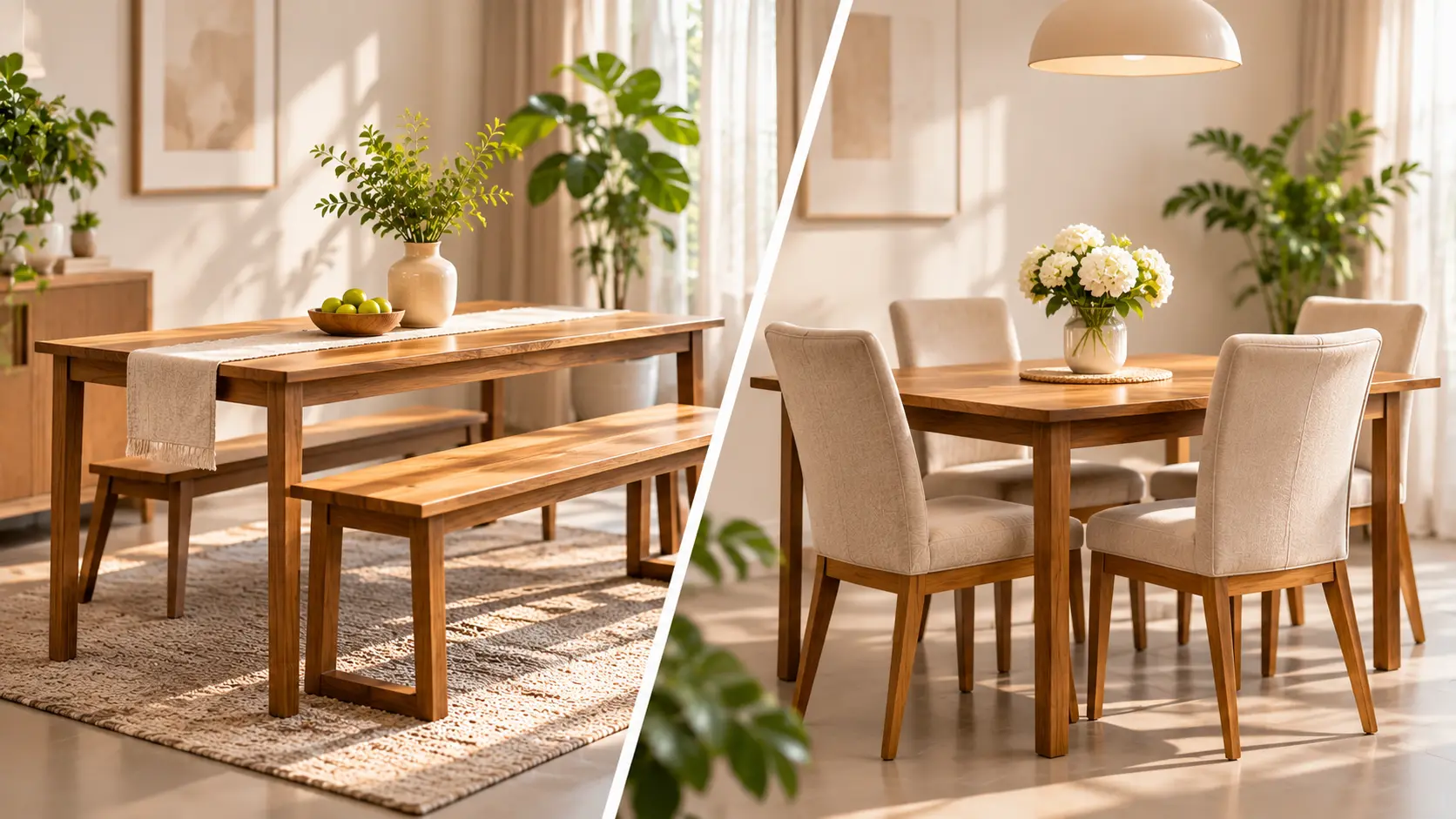
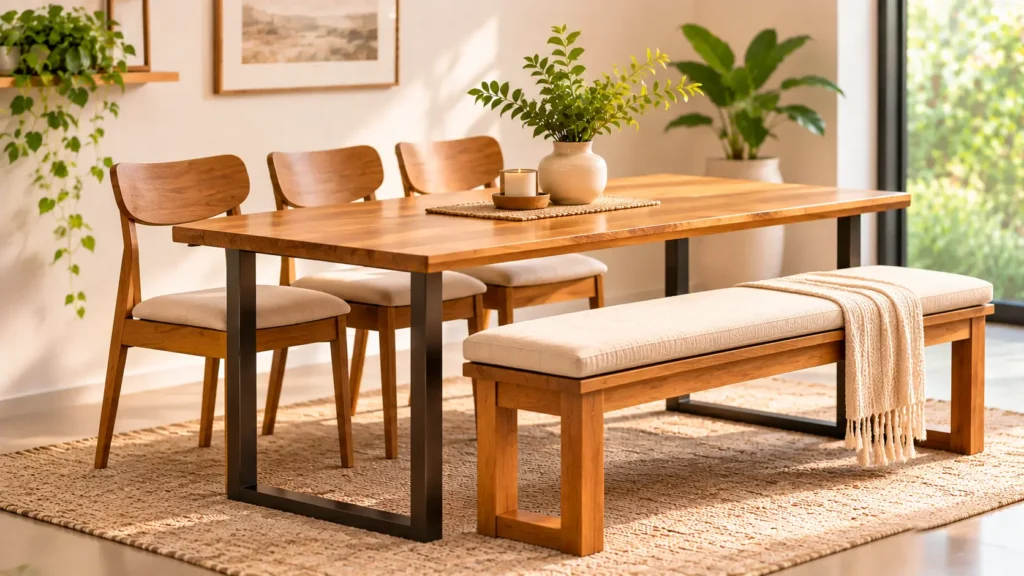
A dining table with bench seating replaces one or more individual dining chairs with a long seat designed to accommodate multiple people.For example, a six-seater dining table may have three chairs on one side and a bench on the other, or a bench on each long side with individual chairs at the ends. read our comparison of round vs rectangle tables.
The arrangement depends on the table’s size, available space and seating requirements.A dining table bench set can be designed with wooden, metal or upholstered seating. Some benches have backrests, while others feature a simple backless design.The biggest difference is that a bench provides shared seating, whereas dining chairs offer separate seats for each person.This distinction influences comfort, accessibility and how efficiently the dining area can be used. Choosing the right dining table design depends on your available space, seating requirements and the overall style of your dining area.
What Are the Advantages of a Dining Table with Bench?
Bench seating offers several practical benefits, particularly when the dining area needs to accommodate different activities or seating requirements.
1. Can Help Save Space in Compact Dining Areas
One reason homeowners consider a dining table with bench seating is its potential to save space.A backless bench may be pushed beneath the table when it is not in use, provided the table’s legs and support structure allow sufficient clearance.
This can help keep walkways relatively clear, especially in apartments where the dining area is connected to the living room or kitchen. For more layout ideas in compact homes, explore our guide on small apartment furniture. However, a bench does not automatically require less space than chairs. The actual benefit depends on the bench dimensions and how much room is available for people to sit down and stand up.
2. Offers Flexible Seating for Families
A bench can sometimes accommodate an additional person, particularly when children are seated together.Unlike individual chairs, which have fixed seating positions, a bench provides a continuous seating surface.
This flexibility can be useful during family gatherings or when extra guests visit.However, seating capacity should still be planned according to the available width. Overcrowding a bench can make meals uncomfortable.
3. Creates a Casual and Welcoming Appearance
A dining table bench set can give the dining area a relaxed, contemporary appearance. Benches work particularly well with wooden dining tables, minimalist interiors and open-plan layouts. Exploring the latest dining table designs can help you find a style that complements your dining space. To choose durable timber for your table and bench frame, check our buyer’s guide on the best woods for furniture.
They can also create a visually lighter arrangement because fewer individual chair backs are visible around the table.For homeowners exploring different dining table set up ideas, combining a bench with chairs can offer an interesting balance between traditional and modern seating.
4. Can Be Customized to Match the Table
A bench can be designed to complement the dining table in terms of length, material, finish and upholstery.
For example, a wooden dining table may be paired with a matching wooden bench, while an upholstered bench can provide additional cushioning. Custom sizing also ensures that the bench fits beneath the table without interfering with its legs or base. Choosing custom made furniture allows you to match exact measurements and finishes. Similarly, custom dining tables can be designed with matching benches to create a coordinated seating arrangement that suits your dining space.
What Are the Disadvantages of Dining Bench Seating?
Although benches have their advantages, they also introduce certain practical limitations.
1. Limited Back Support
Many dining benches are designed without backrests.While this creates a clean appearance, it may not be comfortable for everyone, particularly during longer meals or conversations.
Dining chairs generally provide individual back support, making them more suitable for people who prefer a supported sitting position.A bench with a backrest can improve comfort, but it may also occupy more space and cannot always be tucked beneath the table.
2. Getting In and Out Can Be Less Convenient
With individual dining chairs, each person can move their chair independently.On a bench, someone seated in the middle may need others to shift before getting up.
This can become inconvenient during everyday meals, especially when family members frequently move between the dining table and kitchen.For older adults or people who find sideways movement difficult, individual chairs may be easier to use.
3. Less Flexibility in Furniture Arrangement
Dining chairs can be moved separately, rearranged or occasionally used in another room.A bench is generally longer and may be less convenient to move.Its usefulness also depends on the dimensions of the dining table. If you change the table later, the bench may not fit the new arrangement.
4. Comfort Depends on the Design
Not every bench offers the same level of comfort.Seat height, depth, cushioning and support all influence the experience.A narrow wooden bench without cushioning may be suitable for short meals but less comfortable for extended sitting. if you plan to use the dining area for working, studying or spending long periods together, seating comfort deserves additional attention.
Make your space unique with Suhaus custom furniture, designed to match your style and needs.
Explore Our Dining TablesDining Table with Bench vs Chairs: A Practical Comparison
Here is how the two arrangements compare across important factors. When comparing dining table chairs with bench seating, consider factors such as comfort, back support, accessibility and available floor space.
| Factor | Dining Table with Bench | Dining Table with Chairs |
| Space efficiency | Can save space if the bench fits beneath the table | Requires clearance to pull individual chairs out |
| Seating flexibility | Shared seating may accommodate different group sizes | Each chair provides a defined seating position |
| Back support | Depends on whether the bench has a backrest | Usually available with standard dining chairs |
| Ease of access | Middle occupants may find it harder to get up | Each person can move independently |
| Appearance | Casual, streamlined and contemporary | Available in traditional and modern styles |
| Rearrangement | Longer seating unit is less flexible | Individual chairs are easier to reposition |
| Best suited for | Compact layouts and informal family dining | Everyday comfort and flexible seating |
Neither arrangement is universally better. The right choice depends on the dining room layout and the people using it.
How Much Space Is Needed for a Dining Table?
Before choosing between benches and chairs, it is important to understand the space needed for dining table arrangements.The table dimensions alone do not determine whether the dining area will feel comfortable.You also need space for seating, movement and access to nearby furniture.
1. Allow Enough Room Around the Table
As a general planning guideline, approximately 90 cm of clearance from the table edge to a wall or nearby furniture can provide room for seating and movement. Where people regularly need to walk behind occupied seats, around 110–120 cm or more may be preferable.These are planning guidelines rather than fixed rules. Actual requirements depend on chair depth, bench design and the layout of the room.
2. Check the Bench Dimensions
If you want the bench to fit beneath the table, measure the distance between the table legs rather than relying only on the tabletop length. Also, check the table’s apron or supporting structure, which may reduce the available clearance.A bench that is too long may interfere with the legs, while one that is too deep may project into the walkway.
3. Consider Seating Width
For comfortable adult dining, approximately 55–60 cm of seating width per person is a useful starting point.For example, a bench intended for three adults may require around 165–180 cm of usable seating width.The exact requirement depends on individual comfort, table design and whether people need additional elbow room.
4. Plan for Everyday Movement
Think about what happens when everyone is seated.Can someone comfortably walk from the kitchen to the living room? Can drawers or cabinets still open? Is there enough room to move the bench? These everyday details often matter more than how spacious the dining area appears when the furniture is unoccupied.
Dining Table Set Up Ideas for Different Homes
There are several ways to combine benches and chairs without compromising the practicality of the dining area.
1. Bench on One Side and Chairs on the Other
This is a balanced arrangement for homeowners who want the appearance of bench seating without giving up individual chairs entirely.The bench can be used by children or family members who prefer shared seating, while chairs remain available for those who want back support.
2. Bench Against a Wall
Placing a bench along a wall can help organize a compact dining space.However, a wall-side bench may make it difficult for the person seated in the middle to get out without disturbing others.Consider how frequently the seating will be used before choosing this layout.
3. Benches on Both Sides
Using two benches creates a simple, symmetrical dining arrangement.It can work well for casual family dining, but may not be ideal when everyone prefers individual seating or back support.
4. Chairs at the Ends with Benches Along the Sides
For a longer rectangular dining table, benches along the sides and chairs at the ends can provide a combination of shared and individual seating.This arrangement is worth considering when you regularly entertain guests.
Which Is Better for Everyday Family Use?
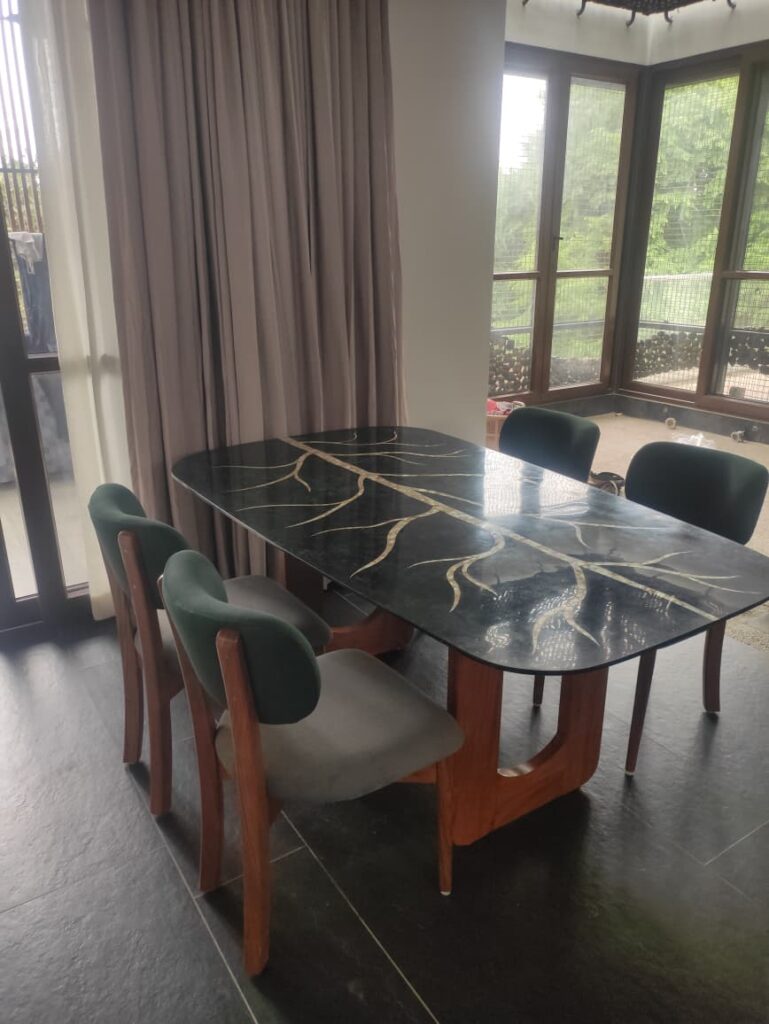
For everyday dining, comfort and ease of movement should be the main priorities.A conventional dining table and chair set may be more suitable for households with older family members, people who prefer back support or those who spend extended periods at the dining table.A dining table with bench seating may work well for families with children, compact dining areas or homeowners who prefer a casual seating arrangement.You can also combine both options rather than choosing one exclusively.
At Suhaus, we believe dining furniture should be planned around the available space and how a family uses it. When considering customized dining furniture, details such as table dimensions, seating height, leg placement and upholstery can make a meaningful difference.Learn more about durable furniture construction to see how joinery and frame support keep heavy-use dining pieces stable for years. The goal should be to create a dining arrangement that feels comfortable in daily use, not simply one that looks attractive in a photograph.
Final Takeaway
A dining table with bench seating can be a practical and visually appealing alternative to conventional dining chairs.It may help save space, offer flexible seating and create a relaxed dining atmosphere. However, limited back support and reduced ease of movement can make benches less convenient for some households.
Before deciding, measure your dining area, check the seating clearance and consider who will use the table most frequently.If you want a balance between comfort and space efficiency, combining a bench with individual chairs may be the most practical solution.Ultimately, the best dining arrangement is one that fits your home comfortably and makes everyday meals enjoyable.
If you are planning to upgrade your dining space, exploring different dining table options in Bangalore can help you find a design that suits your home. Suhaus, among the custom furniture manufacturers in Bangalore, offers furniture solutions that consider design, dimensions and everyday functionality.
Make your space unique with Suhaus custom furniture, designed to match your style and needs.
Explore Our Dining TablesFrequently Asked Questions
1. Is a dining table with bench seating comfortable?
Yes, a dining bench can be comfortable when it has suitable seat dimensions, adequate support and cushioning if required. However, backless benches may be less comfortable than dining chairs during extended sitting.
2. Does a dining bench save more space than chairs?
A dining bench can save space if it fits beneath the table when not in use. However, it still requires sufficient clearance for people to sit down and get up comfortably.
3. How many people can sit on a dining bench?
The seating capacity depends on the usable bench length. As a general guideline, allow approximately 55–60 cm of width per adult for comfortable dining.
4. Is a dining bench suitable for small apartments?
Yes, particularly when the bench can be tucked beneath the table. A combination of bench seating and individual chairs can also work well in compact dining areas.
5. Can I use a bench and chairs together at the same dining table?
Absolutely. A bench on one side and chairs on the other is a practical arrangement that combines flexible seating with individual comfort. The important thing is to ensure the seat heights and dimensions work well with the table.