How to Choose the Right Sofa Size for Your Living Room
Buying a sofa often starts with a picture. You see a design you like, imagine it in your living room and start thinking about colours and fabrics. But there is one decision that deserves attention before any of that: the right sofa size for your living room. .
A sofa can look perfectly proportioned in a showroom and feel enormous at home. It can fit against a wall but leave barely enough room to walk past it. Sometimes, the sofa itself fits, but the coffee table, television viewing distance and other furniture no longer work together.
Finding the right sofa size for your living room is not simply about measuring your wall. It is about understanding how the entire room will function once your sofa set in bangalore arrives, aligning seamlessly with other essential items outlined in our guide on the Complete Living Room Furniture List for Every Home.
1. Start with the room, not the sofa
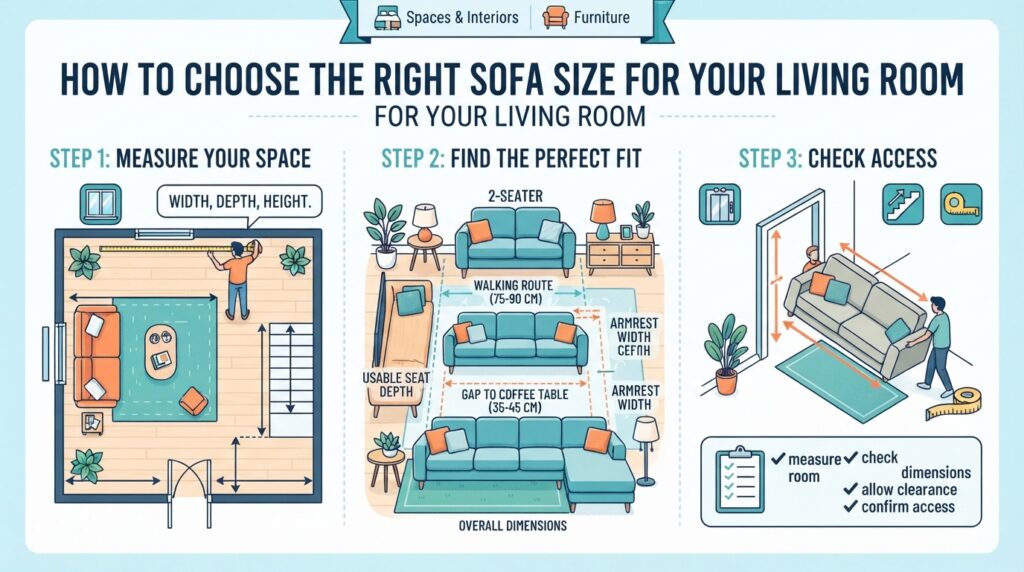
Before looking at any living room sofa options, measure the available space in your living room. Note the wall lengths, windows, doorways, balcony access, passageways and any existing furniture you plan to keep. A common mistake is measuring the wall and assuming that a sofa slightly shorter than it will fit comfortably. That leaves out the space needed for movement and other furniture.
For example, a sofa measuring 210 cm may fit along a 240 cm wall. However, if a door opens into that area or a side table occupies one end, the available space may be much less than it appears on paper. It helps to draw a simple floor plan with the main furniture marked. You do not need professional design software. A rough sketch with accurate measurements is often enough to identify problems before ordering.
2. Measure the sofa itself, not just the seating area
When comparing sofas, pay attention to three dimensions.
| Measurement | What it tells you | Why it matters |
| Width | The distance from one outer side to the other | Determines how much wall and floor space the sofa occupies |
| Depth | The distance from the front edge to the back | Affects how far the sofa projects into the room |
| Height | The distance from the floor to the highest point | Matters near windows, wall features and other furniture |
Also check the seat height, usable seat depth and armrest width if comfort is important to you. Two sofas with identical external dimensions can feel very different because their arms, backrests, and cushions occupy different amounts of space—something worth keeping in mind alongside understanding internal quality, as explained in our post on How to Know What Is Inside a Sofa Before You Buy It. .
A sofa with thick arms may offer less usable seating than a more compact design of the same overall width. Similarly, a deep sofa can be comfortable for lounging but leave less room for movement in a narrow living room.
3. How much space should you leave around a sofa?
There is no single layout that works for every home, but some practical starting points can help.
| Area | Practical starting point |
| Main walking route | Aim for around 75 to 90 cm where the layout allows |
| Gap between sofa and coffee table | Around 35 to 45 cm is a useful starting point |
| Space behind a sofa | Depends on whether it is against a wall or used as a passage |
| Space beside the sofa | Allow for side tables, door movement and access to windows where relevant |
These are planning guidelines, not strict rules. A compact apartment may require compromises, while a larger living room may benefit from wider passages. The important thing is to preserve comfortable movement without making the seating arrangement feel disconnected.
If someone regularly walks between the sofa and the television area, for instance, that route deserves more attention than a gap that nobody needs to use.
4. Should you choose a two seater, three seater or L shaped sofa?
The number of seats is only a starting point. Actual dimensions vary considerably between designs and manufacturers.
| Sofa type | Often suits | What to watch for |
| Two seater | Smaller living rooms or secondary seating | Check whether it provides enough seating for everyday use |
| Three seater | Main seating in many family living rooms | Compare actual width, arm size and seat space |
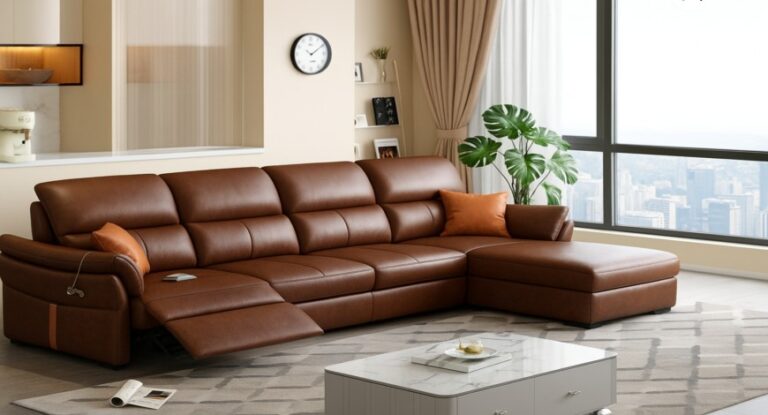
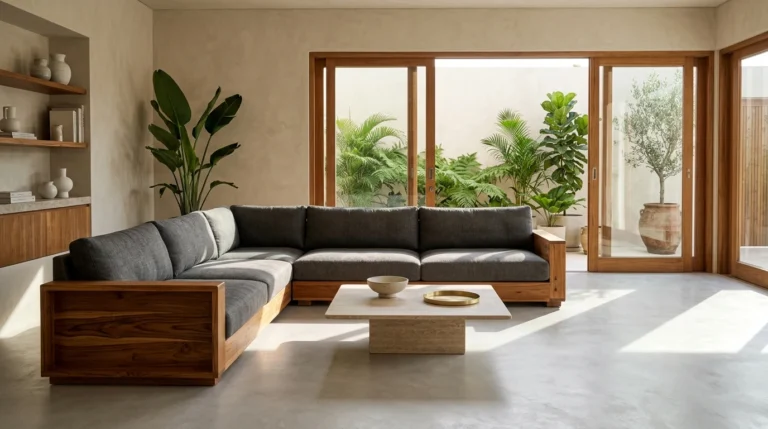
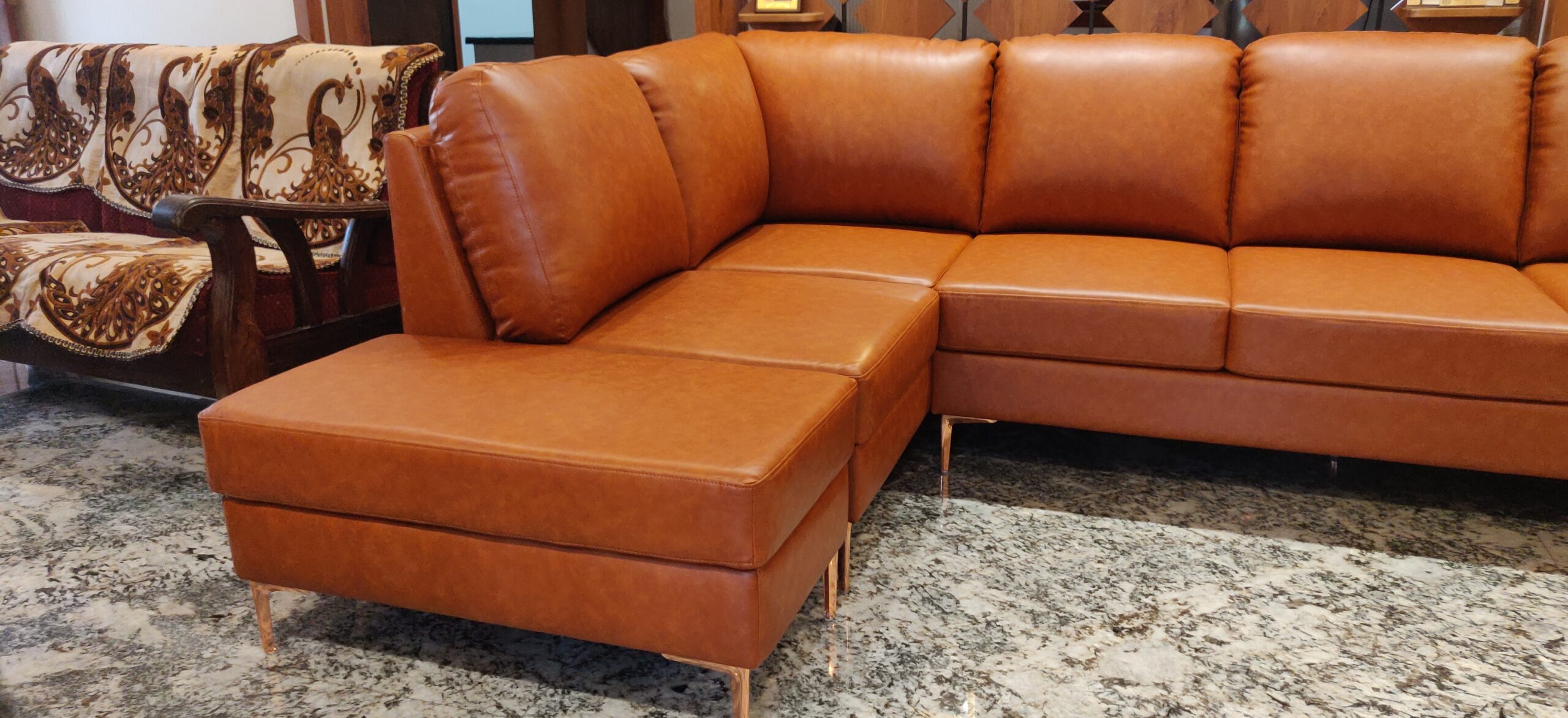
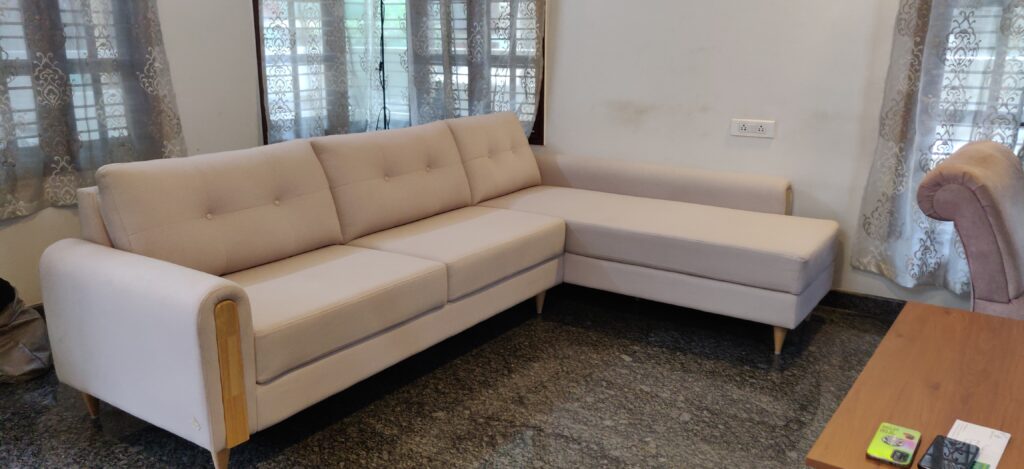
| L shaped sofa | Larger seating needs or layouts with a suitable corner | Check the projection of both sections and the remaining passage |
| Modular sofa | Rooms where configuration flexibility is useful | Confirm connector systems, individual module dimensions and stability |
An L shaped sofa is not automatically the best use of space. It can provide generous seating, but the longer section may block a passage or make a room difficult to rearrange. A three seater with a separate chair can sometimes create a more flexible layout.
Think about how your family actually uses the room. Do you mostly sit upright and talk, watch television together, stretch out to relax or frequently move furniture around? The answers should influence the configuration.
5. Do not forget the coffee table and television
A sofa does not operate in isolation. Its position affects the rest of the living room. If the sofa is too deep, the coffee table may end up too close to the television unit or block the main walking route. If it is too wide, you may lose the space needed for an accent chair or side table.
Before finalising the sofa, mark out the proposed position of the coffee table, television unit and other essential pieces. Check that drawers and cabinet doors can open and that people can move around without constantly squeezing past furniture. This is particularly useful in apartments where the living room also serves as the main route to a balcony, dining area or bedroom corridor.
6. Will the sofa fit through your door?
There is an important difference between a sofa fitting inside a room and being able to get it into the room in the first place. Measure the entrance door, internal doorways, corridor widths, staircase turns and lift dimensions where relevant. Also check the height available when the sofa needs to be tilted or turned. Do not compare the doorway width with only the sofa’s width. Its height and depth can become the limiting dimensions when manoeuvring around corners.
If access is tight, ask the manufacturer whether the sofa can be delivered in sections, whether its legs or other components can be removed, and how it will be assembled at the destination.
When working with experienced sofa manufacturers in bangalore like Suhaus, customisation can include considering the practical constraints of the home rather than choosing a standard configuration without checking access. If you expect to move homes in the future, it is worth discussing dismantling and reassembly before ordering.
7. Can a custom sofa solve a sizing problem?
Sometimes, yes. A custom made sofa can be exceptionally useful when a room has an awkward corner, a narrow passage, an unusual wall length, or a specific seating requirement that standard sizes do not address.
However, customisation is not automatically necessary. If a ready made sofa fits the room, suits your comfort needs and can be delivered without difficulty, it may be a perfectly sensible choice.
The advantage of relying on a trusted customized home furniture manufacturer in bangalore is that dimensions, armrests, seat depth, and configuration can be considered together. The trade-off is that the design needs careful planning because you cannot always rely on simply exchanging the product if the proportions feel wrong later. Before confirming a custom order, get the dimensions and configuration in writing. A floor plan or simple drawing showing the sofa in the intended position can help everyone understand what is being made.
8. A simple checklist before you order
Before paying for your custom sofa bangalore project or stock piece, make sure you have checked the following:
• Measured the available wall and floor space.
• Checked the sofa’s full external width, depth and height.
• Allowed enough space for walking routes and other furniture.
• Considered the coffee table, television unit and door movements.
• Confirmed that the sofa can pass through the entrance, corridors and lift.
• Compared usable seat space, rather than judging capacity by the seat count alone.
• Confirmed the final dimensions and configuration with the seller.
If possible, mark the sofa’s footprint on the floor using masking tape. Walk around the outline, sit in the remaining space and imagine your normal routine. It is a simple exercise that can reveal problems a photograph will not show.
The takeaway
The right sofa is not necessarily the largest one that fits along your wall, or the smallest one that leaves the most floor space. It is the one that gives you the seating you need while allowing the room to function comfortably.
Measure the room, check the complete sofa dimensions, plan the surrounding furniture and confirm delivery access before ordering. If standard sizes do not work, explore customisation with the measurements in hand.
A little planning before purchase can save you from living with a sofa that looks good but never quite fits your home—and can also help prevent long-term wear issues detailed in our article on Why Does a Sofa Become Uncomfortable After a Few Years?.
Questions people often ask
1. How do I know what sofa size is right for my living room?
Start with the room measurements and walking routes, then compare the sofa’s full external dimensions. Consider the other furniture that must fit into the same space.
2. Is an L shaped sofa suitable for a small living room?
It can be, depending on the layout and dimensions. Check the length of both sections, the space needed for movement and whether the configuration blocks access to other areas.
3. Should I buy a sofa before or after finalising my interiors?
Ideally, coordinate the sofa dimensions with the room layout before finalising major decisions. If interior work is already underway, share the proposed sofa measurements with your designer to avoid conflicts with passages, electrical points and other furniture.
4. Can I order a sofa in a custom size?
Many furniture makers offer custom sizing. Ask which dimensions can be changed, how those changes affect comfort and cost, and whether the final configuration will fit through your home’s access points.