How to Prevent Cracking in Wooden Furniture: Expert Care & Tips Guide
One of the most common questions people ask after buying solid wooden furniture is surprisingly simple.
“Will the wood crack over time?”
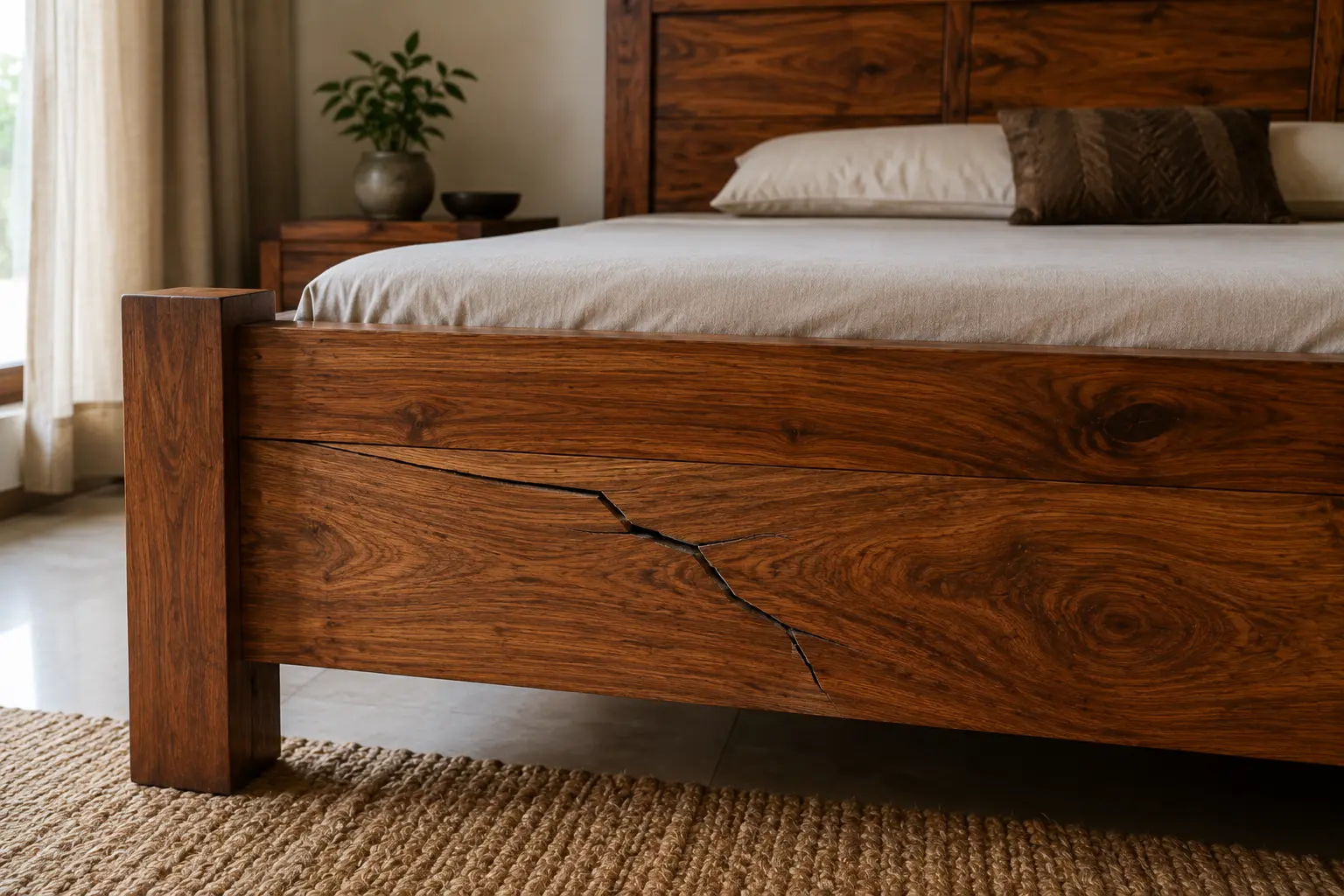
The honest answer is that wood is a natural material. Unlike plastic or metal, it continues to respond to its surroundings. Changes in temperature, humidity, and even how the furniture is maintained can affect it over the years.
The good news is that cracking isn’t inevitable. In many cases, it’s preventable. Understanding why it happens is far more useful than trying to fix it after the damage appears.
Let’s look at what causes wooden furniture cracks, how you can prevent them, and what to look for before buying furniture in the first place.
Why Does Wooden Furniture Crack?
Many people assume cracks appear because the furniture is old.
Age can play a role, but it’s rarely the main reason.
Wood naturally expands and contracts as moisture levels change. If the timber hasn’t been properly seasoned or is exposed to harsh conditions for long periods, small cracks can eventually develop.
The cause is often a combination of material, environment, and maintenance rather than a single issue.
Common Reasons Wood Furniture Develops Cracks
| Cause | What Happens |
| Unseasoned timber | Excess moisture causes movement as the wood dries |
| Direct sunlight | Dries the surface unevenly over time |
| Sudden humidity changes | Wood expands and contracts repeatedly |
| Poor construction | Stress builds around weak joints |
| Lack of maintenance | Surface dries out faster than expected |
The encouraging part is that most of these factors can be managed.
It Starts Long Before the Furniture Reaches Your Home
Here’s something many buyers don’t realise.
The biggest decision affecting a piece of furniture is often made before it’s even manufactured.
Properly seasoned timber contains much less moisture than freshly cut wood. This makes it far more stable when used inside homes.
Without proper seasoning, the wood may continue drying after the furniture is built. That’s when movement, shrinkage, and eventually cracking become more likely.
Good furniture begins with good timber.
Keep Furniture Away from Direct Sunlight
Natural light makes a room feel wonderful.
Direct afternoon sunlight on wooden furniture is a different story.
Over time, constant exposure can dry the surface unevenly, causing the wood to lose moisture faster than intended.
If possible:
- Avoid placing wooden furniture directly beside large west-facing windows.
- Use curtains or blinds during the hottest part of the day.
- Rotate decorative pieces occasionally if one side receives constant sunlight.
Small adjustments like these can make a noticeable difference over the years.
Maintain a Stable Indoor Environment
Wood prefers consistency.
Extreme changes in humidity are usually harder on furniture than consistently warm or consistently cool conditions.
If your home experiences large seasonal changes, try to avoid placing furniture:
- Next to heaters.
- Directly under air-conditioning vents.
- Close to fireplaces.
- Against damp walls.
Steady conditions help wood remain more stable.
Regular Cleaning Matters Too
Cleaning isn’t only about appearance.
Dust particles can slowly become abrasive, especially on polished surfaces.
A simple routine usually works best.
| Do This | Avoid This |
| Wipe with a soft dry or slightly damp cloth | Excess water |
| Use wood-friendly cleaners occasionally | Harsh household chemicals |
| Clean spills promptly | Leaving moisture on the surface |
| Dust regularly | Scrubbing with rough materials |
Simple habits are often more effective than expensive products.
Does Polish Prevent Cracks?
This is a common misconception.
Furniture polish improves the appearance and provides a degree of surface protection.
It does not prevent structural cracking if the wood underneath hasn’t been properly seasoned or the furniture is exposed to unsuitable conditions.
Think of polish as protection for the finish, not a cure for poor construction.
One Thing We Often Tell Customers
People naturally ask about:
- Design
- Colour
- Finish
Very few ask whether the timber has been seasoned.
Yet that’s one of the biggest factors affecting long-term stability.
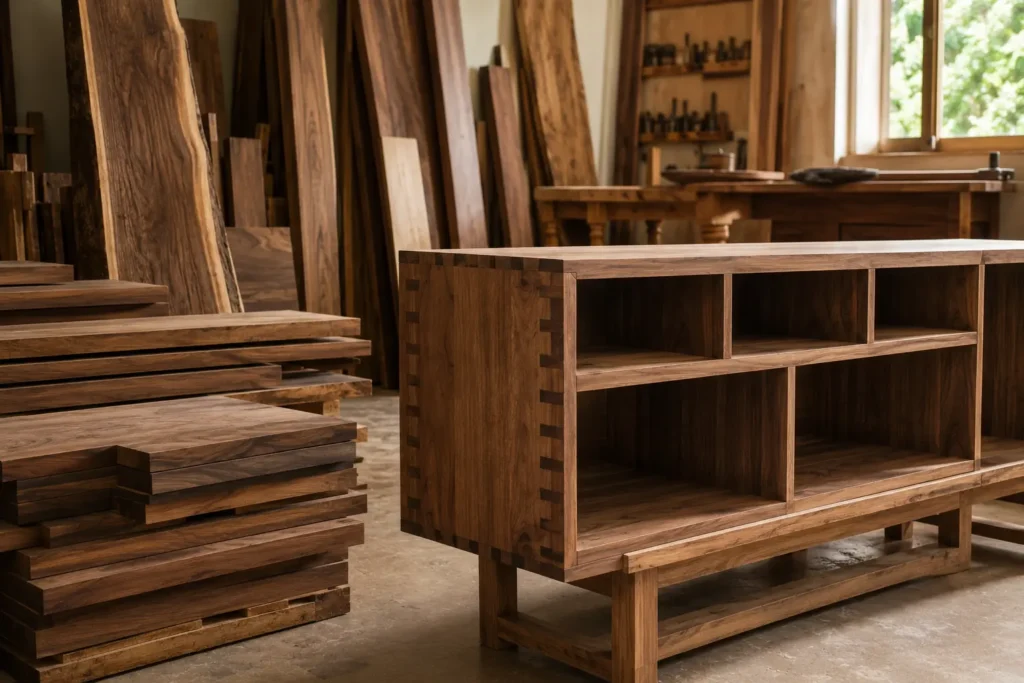
At Suhaus custom furniture manufacturer in Bangalore, we’ve always believed that customers should understand what they’re investing in before the polish is applied. That’s why we encourage people to see furniture during manufacturing whenever possible. Looking at the raw timber, understanding the wood species, and seeing how it’s constructed builds far more confidence than looking only at the finished product.
Once furniture has been polished, almost any wood can look beautiful. The difference usually reveals itself years later.
Can Small Cracks Be Repaired?
Sometimes, yes.
Minor surface cracks can often be repaired depending on their size and location.
However, if the crack is caused by poor-quality timber or ongoing moisture movement, repairing the surface alone may not solve the underlying issue.
It’s always better to identify why the crack developed before attempting a repair.
Common Mistakes That Shorten the Life of Wooden Furniture
We’ve seen these quite often:
- Placing furniture in direct sunlight for years.
- Cleaning with harsh chemical products.
- Leaving water on wooden surfaces.
- Assuming all solid wood behaves the same.
- Buying furniture without asking about seasoning.
- Believing a thick polish automatically means good quality.
Most of these are easy to avoid once you’re aware of them.
Before You Buy Wooden Furniture
If you’re planning to invest in solid custom wood furniture, ask these questions:
| Question | Why It Matters |
| What wood species has been used? | Different woods perform differently |
| Has the timber been seasoned? | Reduces movement and cracking |
| Can I see unfinished wood? | Confirms the actual material |
| How is the furniture constructed? | Good joinery improves longevity |
| What care do you recommend? | Shows the manufacturer’s confidence in the product |
A good manufacturer should be happy to answer these.
Good to Know
Many people believe cracks only happen because furniture is old.
In reality, cracking usually begins much earlier, often during manufacturing if the wood hasn’t been properly prepared.
That’s why the quality of the timber and the manufacturing process matter just as much as how you care for the furniture at home.
FAQ Section
- Why does wooden furniture crack?
Wood naturally expands and contracts with changes in moisture and humidity. Poor seasoning, direct sunlight, and environmental changes can all contribute to cracking.
- Can wooden furniture cracks be prevented?
In many cases, yes. Choosing properly seasoned wood, avoiding direct sunlight, and following simple maintenance practices can significantly reduce the chances of cracking.
- Does furniture polish stop wood from cracking?
No. Polish protects the surface finish but cannot prevent structural movement inside poorly seasoned timber.
- Can cracked wooden furniture be repaired?
Minor cracks can often be repaired, but larger structural cracks may require professional assessment to address the underlying cause.
- Where can I buy quality custom wooden furniture in Bangalore?
Many manufacturers offer custom wooden furniture in Bangalore, but it’s worth choosing one that is transparent about the wood species, seasoning process, and construction methods rather than focusing only on the finish.
Takeaway
Wood is a natural material, and that’s part of what makes it beautiful. With the right timber, proper seasoning, thoughtful manufacturing, and a little regular care, wooden furniture can remain strong and attractive for decades. Instead of asking how to fix cracks after they appear, ask how the furniture was built before you buy it. That’s usually where the real answer lies.