Why Wood Seasoning Matters More Than Many Buyers Realise
Wooden furniture can look perfectly fine when it leaves the workshop and still develop problems months later. A panel may begin to warp, a drawer may stop sliding smoothly, or small gaps may appear around joints. Not every such problem comes from the same cause, but one factor buyers often overlook is the moisture inside the wood.
This is where proper wood seasoning for furniture comes in. It is not a finishing technique, a type of polish or a treatment that automatically makes furniture last longer. It is the process of drying timber to a suitable moisture level before it is used.
If you are buying a wooden bed, a dining table, a sofa frame, or exploring options for custom furniture, understanding this process can help you ask better questions and look beyond the finished appearance.
What exactly is wood seasoning?
Freshly cut timber contains moisture. Depending on the species, the part of the tree and how the timber was stored, the amount can vary considerably.
Seasoning means allowing that moisture to reduce in a controlled manner until the wood is suitable for its intended use. This can happen through air drying, kiln drying or a combination of methods.
Air drying relies on natural conditions and airflow over time. Kiln drying uses a controlled environment to manage the drying process. Neither method should be judged by its name alone. How the timber is dried, how evenly it dries and how it is stored afterwards all matter.
The objective is not simply to make wood as dry as possible. Wood continues to exchange moisture with the surrounding air. What matters is whether its moisture level is appropriate for the furniture’s intended environment and whether the timber has been prepared and handled properly. If you want to dive deeper into the specific materials used, you can explore our guide on what are the best woods for making wooden furniture in India.
Why does moisture matter so much?
Wood is a natural material, and it responds to changes in humidity. As it loses moisture, it generally shrinks. As it absorbs moisture, it generally expands. The amount and direction of movement depend on the wood species, how the timber was cut and the conditions around it.
This movement is normal. The problem arises when it is not adequately accounted for during manufacturing.
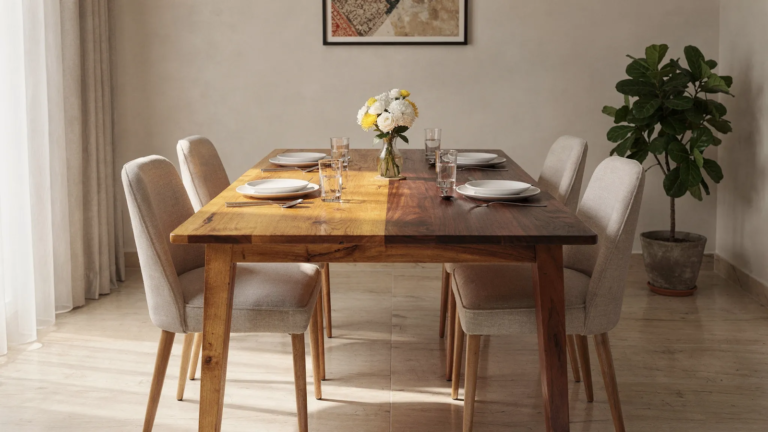
Consider a solid wood dining table design. If its timber has not been dried appropriately, it may shrink after delivery as the wood adjusts to the home environment. Depending on the construction, this can contribute to gaps, movement or stress around joints.
The same principle applies to a custom cot, a wooden cabinet, or the frame inside a custom sofa. Furniture has to cope with natural material movement while remaining functional.
Proper seasoning reduces the risk of moisture related problems. It does not eliminate every possibility of warping, cracking or joint failure, because design, construction, storage and later environmental changes also play a role. For practical tips on protecting your pieces, check out our guide on how to prevent cracking in wood furniture.
What can happen when wood is not dried properly?
| Potential problem | Why it may happen | What a buyer should understand |
| Warping or twisting | Uneven drying or later moisture changes can cause movement | Wood selection, drying and construction all matter |
| Cracks or splits | Moisture loss can create stress, particularly when drying is uneven or too rapid | Not every crack has the same cause |
| Loose joints | Wood movement can place stress on connections | Good joinery must account for movement |
| Gaps between components | Different pieces can shrink or move by different amounts | The way components are assembled matters |
| Doors or drawers that stick | Changes in dimensions can affect clearances | Installation and room conditions can also contribute |
These are possible outcomes, not proof that a piece of furniture was made with unseasoned wood. A product can develop problems for several reasons, and diagnosing the cause requires looking at the actual construction and conditions.
Air dried or kiln dried: which should you choose?
Buyers sometimes hear that kiln dried wood is automatically better. The reality is more nuanced.
Kiln drying allows the drying conditions to be controlled and can help achieve a more consistent moisture level. However, the result still depends on the drying schedule, the timber itself and how it is handled afterwards.
Air dried wood can also produce suitable timber when it is done properly. It generally depends more heavily on ambient conditions and takes longer, and it may not achieve the same moisture level as a controlled kiln process.
| Factor | Air dried timber | Kiln dried timber |
| Drying method | Natural airflow and surrounding conditions | Controlled heat, humidity and airflow |
| Time required | Usually longer | Can be shorter, depending on the process |
| Consistency | Depends heavily on conditions and stacking | Can be controlled more precisely |
| What matters most | Adequate drying and correct storage | Correct drying schedule and correct storage |
| What buyers should ask | How was the timber dried and prepared? | What moisture level was targeted and checked? |
Neither label alone guarantees good furniture. The useful question is whether the timber was dried appropriately for its intended use and kept in suitable conditions before manufacturing.
Does seasoned wood mean the furniture will last longer?
It helps, but it is only one part of the picture.
Imagine two wooden beds or wooden cots in bangalore. Both are made from properly seasoned timber, but one has well designed joints and adequate structural support while the other has weak connections and poor construction. The seasoning process cannot compensate for the difference in workmanship. You can learn more about picking the right bed frame in our guide on which wood is best for wooden cots.
Furniture durability also depends on the wood species, the dimensions of each component, the way joints are made, the load the furniture must carry and how it is used.
For a sofa or a recliner sofa, the wooden frame is only one part of the complete product. Suspension, foam, upholstery and the quality of assembly influence how it performs over time. If you are evaluating seating options, take a look at our insights on how to check a wooden sofa before buying. For a dining table, the top, legs, connections and provision for natural wood movement all deserve attention.
Seasoning is therefore a foundation, not a substitute for good design and manufacturing.
How can you check whether the wood has been seasoned properly?
Here is the difficult part: you generally cannot confirm proper seasoning just by looking at finished furniture.
A smooth surface, attractive grain or good polish does not reveal the wood moisture content inside the timber. Even experienced buyers should be careful about making firm conclusions from appearance alone.
There are, however, useful questions you can ask before placing an order.
1. Ask how the timber was dried.
Was it air dried, kiln dried or purchased from a supplier who carries out the drying? A clear answer helps you understand the process. The method alone does not settle the question of quality.
2. Ask whether moisture content is checked.
A moisture meter can measure moisture in wood, although readings depend on the instrument, wood species, temperature and measurement method. Ask whether the manufacturer checks the timber and what range is appropriate for the intended furniture.
3. Ask how the wood is stored after drying.
Properly dried timber can absorb moisture again if it is stored in unsuitable conditions. Seasoning is not much use if the wood is subsequently exposed to damp conditions or poorly managed storage.
4. Look at the construction, not just the finish.
Ask how the frame is assembled, how the joints are made and how the design accommodates natural movement. A good answer should explain the construction rather than rely only on claims about the wood.
5. Ask what happens if the furniture develops a problem.
Even well prepared timber can move when conditions change. Understand whom you contact, how an issue is assessed and what support is available after delivery.
At Suhaus—trusted by top furniture manufacturers in bangalore—customers can visit the factory and see their own furniture while it is being made. For wooden furniture, this creates an opportunity to look at the components and construction before polish, upholstery or other finishing conceals them. It is a useful level of visibility, although seeing the frame alone does not establish the timber’s moisture content. That still requires appropriate checks.
Does every piece of wooden furniture need the same moisture level?
No. The suitable moisture level depends on factors such as the wood species, the intended use, the construction and the environment in which the furniture will be used.
Furniture made for a humid environment may need different preparation from furniture intended for a consistently air conditioned space. Even within one home, the conditions in a bedroom may differ from those in a damp or poorly ventilated room.
This is one reason a single universal number should not be treated as the answer for every product. A responsible manufacturer should be able to explain how the timber is prepared for the furniture being made, rather than quote a number without context.
Common mistakes buyers make
Assuming heavier wood is better seasoned. Weight is affected by species, dimensions and moisture, among other factors. It is not a reliable test of seasoning by itself.
Believing a polished surface proves the wood is ready. Polish improves appearance and may provide some surface protection, but it does not establish the moisture condition of the timber underneath.
Treating kiln dried as a complete quality guarantee. The process matters, but so do the result, storage, construction and workmanship.
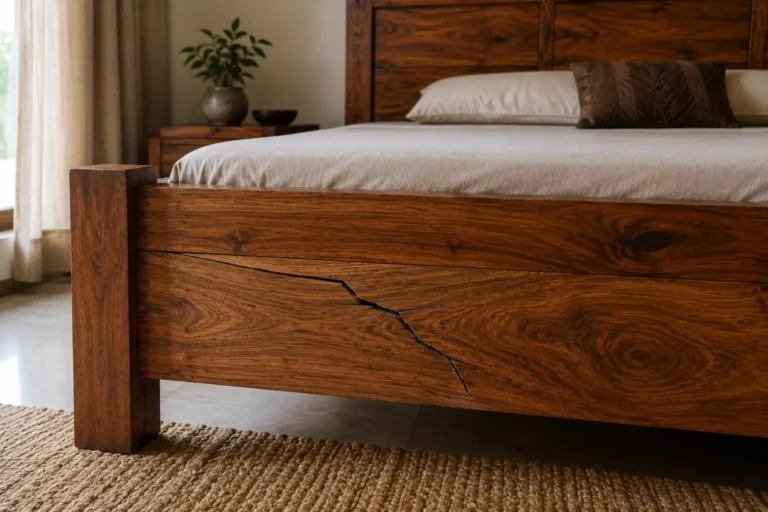
Assuming every crack means bad manufacturing. Some movement is natural, and the cause of a particular crack needs to be assessed. Its location, size, timing and the surrounding construction all matter.
Ignoring the room where the furniture will be used. Major changes in humidity can affect even well made solid wood furniture. Reasonable indoor conditions and suitable care remain important.
The takeaway
Effective wood seasoning for furniture is not the most visible part of furniture making, but it can influence how the finished product behaves over time. Properly prepared timber gives the manufacturer a better starting point. Good design, sound joinery, suitable storage and careful workmanship complete the picture.
When shopping for custom home furniture, do not stop at asking which wood is used or how it is polished. Ask how the timber is prepared before it becomes furniture. A manufacturer who understands the material should be able to explain the process in practical terms.
For more insights on evaluating overall quality and value, you can read our guide on what makes durable furniture and the parts you cannot see.
The aim is not to find a product that will never move or develop a problem. It is to understand how the furniture is made, what risks have been managed and what support is available if something goes wrong.
Questions we get asked often
1. How long does wood need to be seasoned?
There is no single duration that applies to every timber. Drying time depends on the species, thickness, initial moisture content, drying method and surrounding conditions. The achieved moisture level and suitability for use matter more than a fixed number of days or months.
2. Can unseasoned wood be used to make furniture?
Using timber before it is adequately dried for its intended use increases the risk of later movement and related problems. The appropriate preparation depends on the product and the timber.
3. Is kiln dried wood always better than air dried wood?
Not automatically. Both methods can produce suitable timber when managed properly. The quality of the drying process, final moisture condition and subsequent storage matter.
4. Can seasoning prevent all cracks and warping?
No. It reduces certain risks but cannot prevent every effect of changing humidity, poor design, unsuitable construction or environmental conditions.
5. Should I ask about seasoning when buying a wooden sofa or cot?
Yes, particularly if the product uses a substantial wooden frame or solid wood components. Ask how the timber is prepared, whether moisture is checked, how it is stored and how the furniture is constructed.