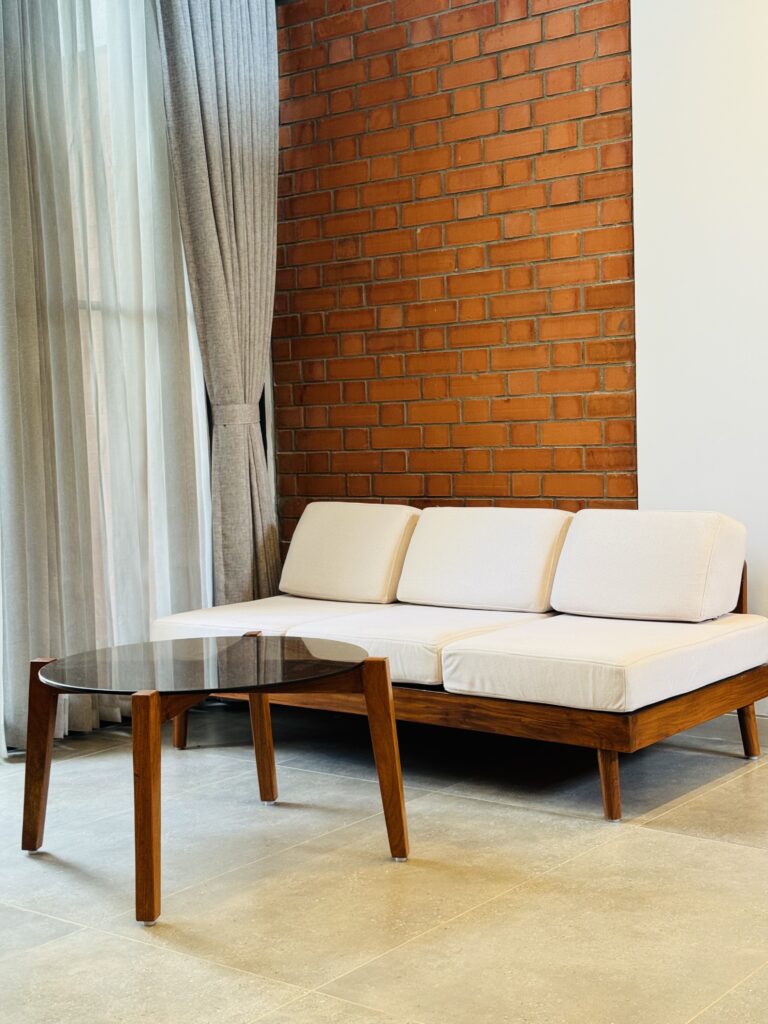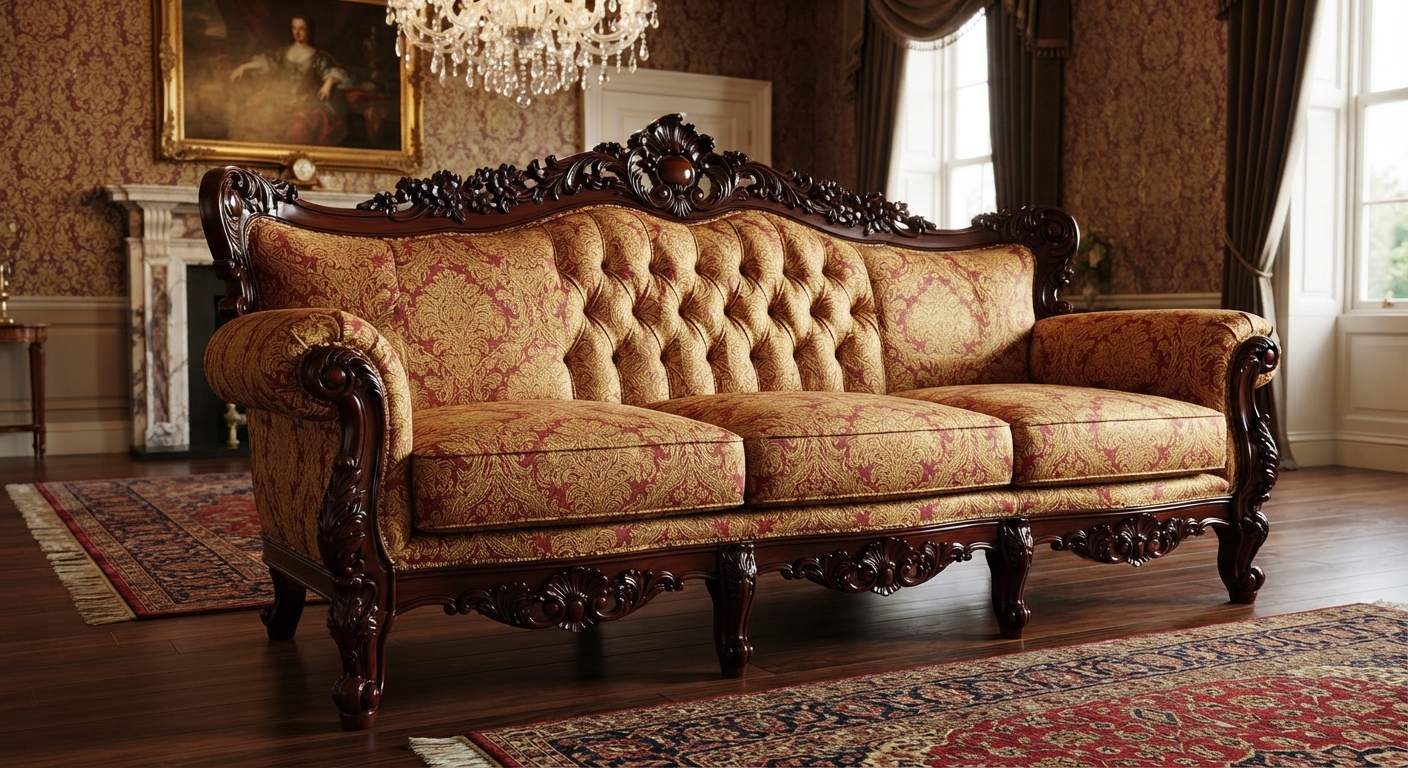
How to Check a Wooden Sofa Before Buying: 8 Things You Can Actually Test
A wooden sofa can look excellent in a showroom and still leave you with questions once it reaches your home. The wood may be polished beautifully, the upholstery may look neat and the sofa may feel solid when you first sit on it. But appearance alone tells you surprisingly little about how well the sofa has been made.
The good news is that you do not need to be a furniture manufacturer to make a better assessment. There are several things you can look at, touch and test before buying. You may not be able to judge every technical detail, but you can certainly spot warning signs and ask better questions. Here are eight things worth checking before you place the order.
1. Sit on it properly, not just for a few seconds
The first test sounds obvious, but many people do it incorrectly. When trying a sofa, do not simply sit down, say “comfortable” and get up. Sit in the way you would actually use it at home. Sit upright, lean back, change your position and stay there for a few minutes. Pay attention to the relationship between the seat depth, seat height, back angle and cushion firmness. A sofa can feel very comfortable for thirty seconds because it is soft. After an hour, that same softness may not provide enough support. Similarly, a very firm sofa is not automatically better. Comfort depends on how the different components work together.
Expert tip: If more than one person will regularly use the sofa, have both of you try it. Body proportions and sitting preferences vary more than people realise.
2. Check whether the frame feels stable
Give the sofa a gentle push from different points. You are not trying to shake it violently. You are simply checking whether the structure feels stable or whether there is excessive movement. A well constructed sofa should feel like one connected structure. If the arms move noticeably, the back shifts independently, or the frame feels loose when you apply ordinary pressure, ask why. This does not mean that every movement automatically indicates poor construction. Some wooden sofa designs are intentionally flexible. The point is to notice unusual looseness and ask the manufacturer about it rather than assuming it is normal.
3. Look underneath the sofa
This is one of the simplest checks buyers can make, yet it is often overlooked because most of the attention goes to the visible parts. If possible, ask whether you can see underneath the sofa. Look at how the wooden members are arranged. Look for supporting members, reinforcement and how the different sections are connected. You do not need to know the technical name of every joint. What matters is whether the manufacturer is comfortable showing you the construction. There is a useful distinction here between seeing a sample and seeing how your furniture is actually constructed. A showroom sample can demonstrate what a manufacturer is capable of making. It does not necessarily tell you exactly what will go into your order. That is why transparency during manufacturing can be more useful than simply being shown a finished sofa.
At Suhaus, a customised furniture manufacturer in Bangalore, customers can visit the factory and see the construction of their own furniture while it is being made. They can see the frame, materials and other parts before everything is covered by upholstery and finishing. If a manufacturer is willing to show you how the furniture is made, that gives you another layer of confidence in what you are buying.
4. Ask what wood is actually being used
“Wooden sofa” is not a sufficient description.
Ask the manufacturer:
What species of wood are you using for the frame?
Then ask whether the same wood is being used throughout the structural frame or whether different materials are being used in different parts. This is where buyers can easily get confused by terms such as “teak finish”, “teak colour” or “teak polish”. These describe the appearance or finish of the furniture. They do not necessarily mean that the furniture is made from teak wood. If the type of wood matters to you, ask specifically about the actual wood species, not the colour or finish. Better still, ask whether you can see an unfinished piece or sample of the wood being used. That question is often more useful than simply asking, “Is this teak?”
5. Look closely at the joints
You do not need to become an expert in joinery to inspect a sofa frame. Look at where major wooden members meet. Do the connections appear properly fitted? Are there visible gaps? Does anything move when you apply normal pressure? Does the construction look considered or does it appear as though pieces have simply been joined wherever convenient? The important thing is not whether you can identify a particular type of joint. It is whether the manufacturer can explain how the important structural connections are made and why. A good furniture maker should be able to answer this without making it unnecessarily complicated. For example, if you ask, “How is this arm connected to the main frame?” you should get a clear answer about the construction rather than only being told that the sofa uses “solid wood.”
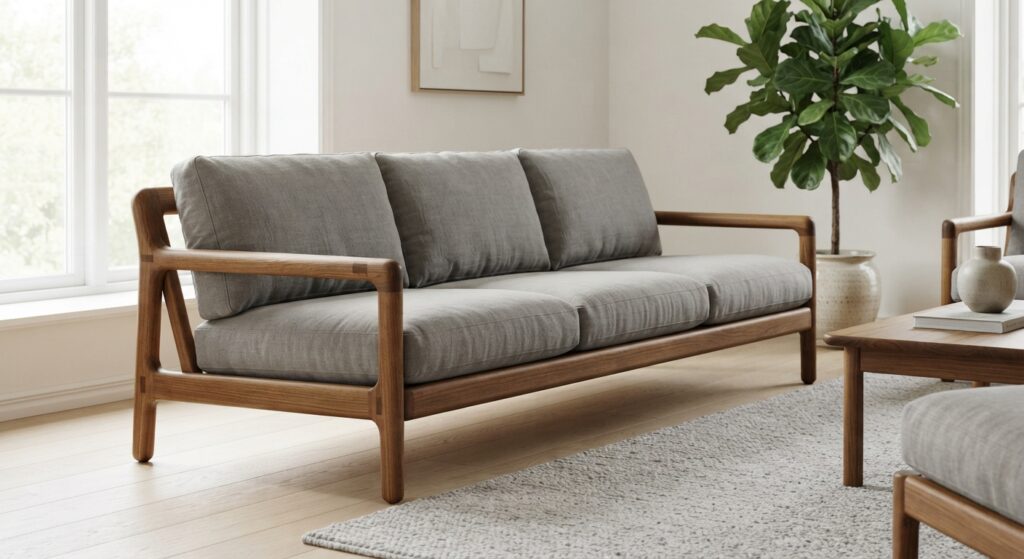
6. Check the proportions of the wooden structure
More wood does not automatically mean a better sofa. This is something buyers sometimes misunderstand. A frame does need adequate structural support, but furniture also has to be designed around its dimensions, load and intended use. Simply making every wooden member thicker is not a substitute for good construction. Look at the overall structure.
Are there appropriate supports beneath longer spans?
Does the frame appear proportionate to the size of the sofa?
Are areas likely to receive more stress properly supported?
These are questions a furniture maker thinks about during construction, but a buyer can also ask about them.
Good to know: A sofa that is extremely heavy is not necessarily a better sofa. Weight can be one clue, but it should never be your main quality test.
7. Examine the finishing, but don’t confuse finishing with construction quality
A good finish can make almost any piece of furniture look more impressive. That is precisely why you should separate appearance from construction when evaluating a sofa. Look at the polish or finish for consistency. Check the visible wooden surfaces, corners and edges.
Are they smooth?
Are there obvious rough areas or uneven finishing?
Then ask yourself a more important question:
What is the finish hiding?
A beautiful polish cannot compensate for poor construction underneath.This is particularly relevant when buying wooden furniture because once the frame is upholstered and finished, much of the construction becomes difficult to inspect. The more expensive the furniture, the more important it becomes to understand what you are actually paying for rather than judging it only by how good it looks on the showroom floor.
8. Ask what happens if something goes wrong
This is the test buyers often remember only after they need it.
Before buying, ask:
- What happens if the frame develops a problem?
- Can the sofa be repaired?
- Can the cushions be replaced or refilled?
- What happens if the upholstery gets damaged?
- Who should I contact after delivery?
- Is the warranty actually written down?
- Does the manufacturer provide service after the sale?
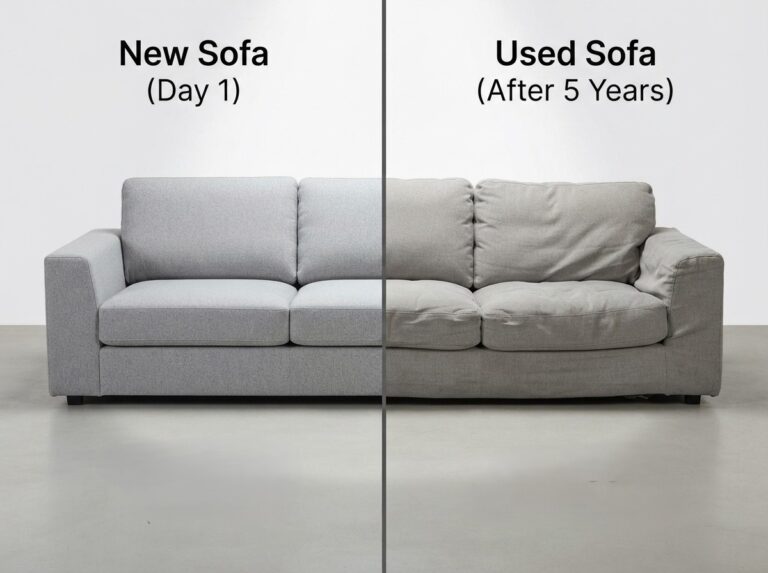
A sofa is not just something you buy and forget about. It is something you may use every day for several years. The quality of the buying experience, communication and after sales support can therefore matter almost as much as the physical product. Two sofas can look similar on the day you buy them and offer very different experiences over the next five years.
A simple wooden sofa inspection checklist
If you are visiting a showroom, you do not need to remember everything in this article.
Use this quick checklist:
| What to check | What to look for | What to ask |
| Comfort | Seat height, depth, firmness and back support | Can the comfort be customised? |
| Stability | Excessive movement or looseness | How is the frame constructed? |
| Frame | Supports and structural members | Can I see the frame? |
| Wood | Actual species being used | What wood is used for the frame? |
| Joints | Gaps, movement and connection quality | How are the major joints made? |
| Proportions | Adequate support for the sofa size | How is this frame designed for its size? |
| Finish | Smoothness and consistency | What is the actual material beneath the finish? |
| After sales | Repairability and service | What happens if something goes wrong? |
You will notice that only a few of these questions are about appearance.
That is intentional.
What you don’t need to worry about
There is also a danger of going too far in the other direction. You do not need to inspect every screw, measure every piece of wood or become an expert in woodworking before buying a sofa. Your job as a buyer is not to manufacture the furniture yourself. Your job is to understand enough to distinguish between:
“This looks good.”
and
“I understand what I am buying and I know what I am paying for.”
That is a much more useful standard. A trustworthy furniture manufacturer should also be able to explain the technical details in a way that an ordinary customer can understand. If every question is answered with vague terms such as “best quality”, “premium wood” or “strong construction”, keep asking for specifics.
What we usually recommend when buying a wooden sofa
At Suhaus, we believe the easiest way to buy furniture with confidence is not to ask customers to trust us more. It is to give them more information. Ask what wood is being used. Understand how the frame is constructed. Test the comfort yourself. Look at the construction where possible. Understand what can be customised and what happens after delivery. Most importantly, ask questions before the furniture is made, rather than trying to resolve them after it arrives at your home. This is one reason we are comfortable showing customers how their furniture is made. Once upholstery and finishing are complete, many of the important parts of a sofa are no longer visible. If you have already seen the construction and understand what is going into your furniture, the finished sofa is no longer a mystery.
The takeaway
You do not need to be a furniture expert to make a better sofa buying decision. Look beyond the polish. Sit properly. Test the stability. Ask what wood is actually being used. Understand the frame. Look at the joints. Ask how the furniture can be serviced later. And whenever possible, see how the furniture is made rather than judging only the finished product. A good wooden sofa should not require you to take everything on faith. And that may be the most useful test of all: how comfortable is the manufacturer with you asking questions?
Questions We Get Asked Often
1. Is heavier wooden furniture always better?
No. Weight can be one indication of the amount of material used, but it does not tell you whether the frame has been properly designed or constructed. Good proportions, appropriate supports, suitable materials and sound construction matter more than weight alone.
2. How can I tell if a wooden sofa is made from teak?
Ask for the actual wood species rather than relying on terms such as teak finish or teak colour. If possible, ask to see an unfinished section or sample of the wood being used.
3. Should I buy a sofa with a very hard wooden frame?
The frame needs to provide adequate structural support, but the sitting comfort comes from the complete construction, including the suspension, cushioning, upholstery and dimensions. A harder frame does not automatically mean a more comfortable or durable sofa.
4. Can I check the quality of a sofa after it has been upholstered?
You can still check its stability, comfort, finish and overall construction, but much of the frame will no longer be visible. That is why seeing the construction before upholstery can be valuable.
5. What is the most important thing to check before buying a wooden sofa?
There is no single test that proves quality. If we had to prioritise, we would look at the frame construction, actual wood being used, structural stability, comfort and what the manufacturer is willing to explain or show you.