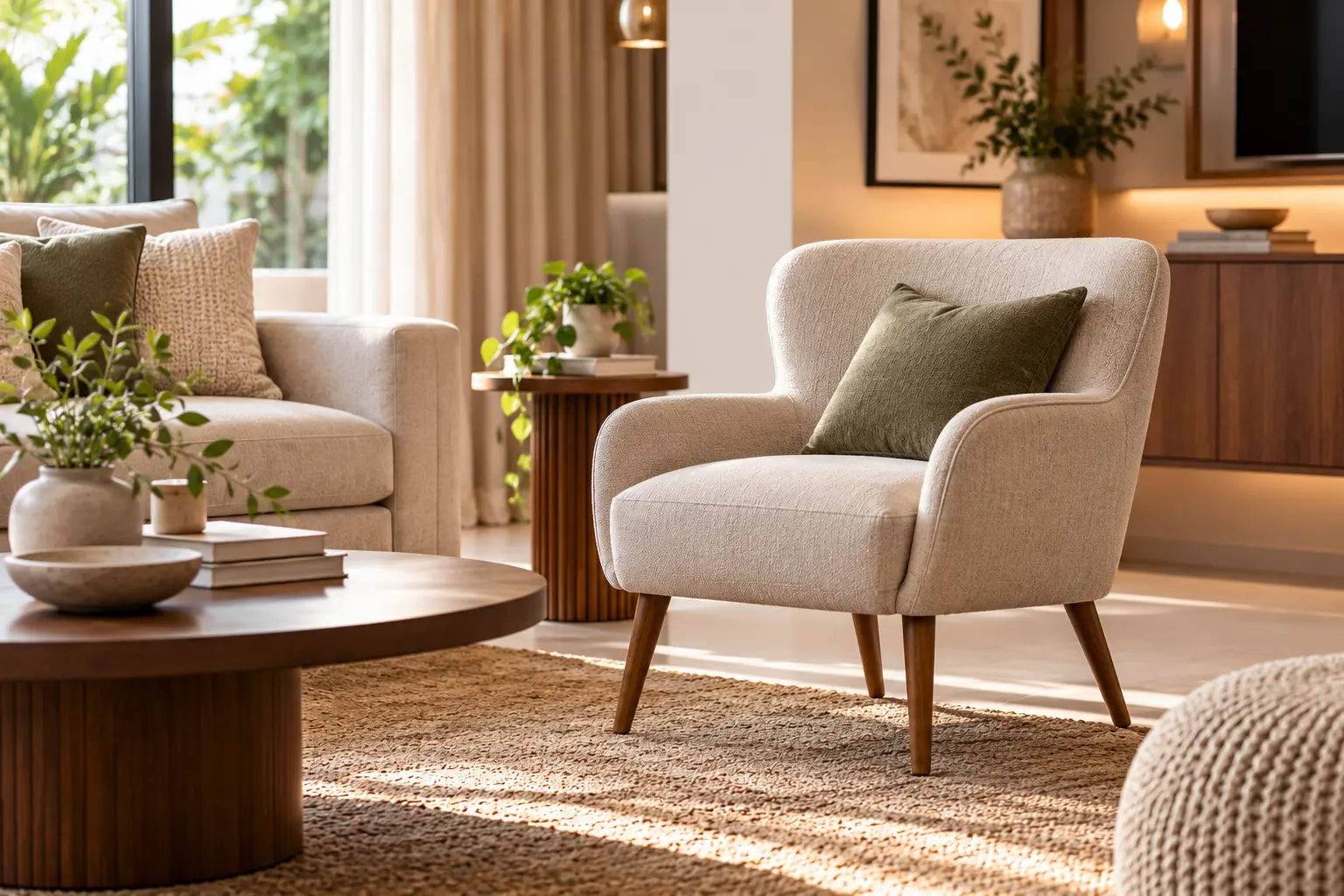
Can Accent Chairs Be Used as Living Room Chairs?
An accent chair is often treated as the extra chair in a living room. Something you place in an empty corner, beside a window or next to a sofa to make the room look more complete.
But that raises a practical question: Can an accent chair actually be used as a regular living room chairs?
Yes, it can.
In fact, the right accent chair can be one of the most useful seats in a living room. The important part is understanding that not every accent chair is designed for the same kind of sitting. Some are meant for short conversations, some are comfortable enough for long sitting, and some are chosen mainly for their shape and visual character. To see how seating choices come together in a complete setup, check out our guide on what types of living room furniture are commonly used.
So before buying one, look beyond the word “accent”.
What Is an Accent Chair?
An accent chair is generally a standalone chair that adds another seating option while bringing a different shape, material, colour or design element into the room.
Unlike a sofa, it is an individual seat. This makes it useful when you want to add seating without making the entire room revolve around another large sofa.
Accent chairs can have many forms. They can be fully upholstered, wooden, swivel chairs, patterned chairs or chairs with more structured backs and arms. If you are exploring distinct options locally, browsing accent chairs bangalore showrooms or custom workshops can give you a clear idea of what styles suit your layout. (If you are also considering accent seating outside the lounge, explore our article on different types of accent chairs suitable for bedrooms).
The important point is that an accent chair describes the role and style of the chair, not necessarily its level of comfort.
A well designed accent chair can be used every day.
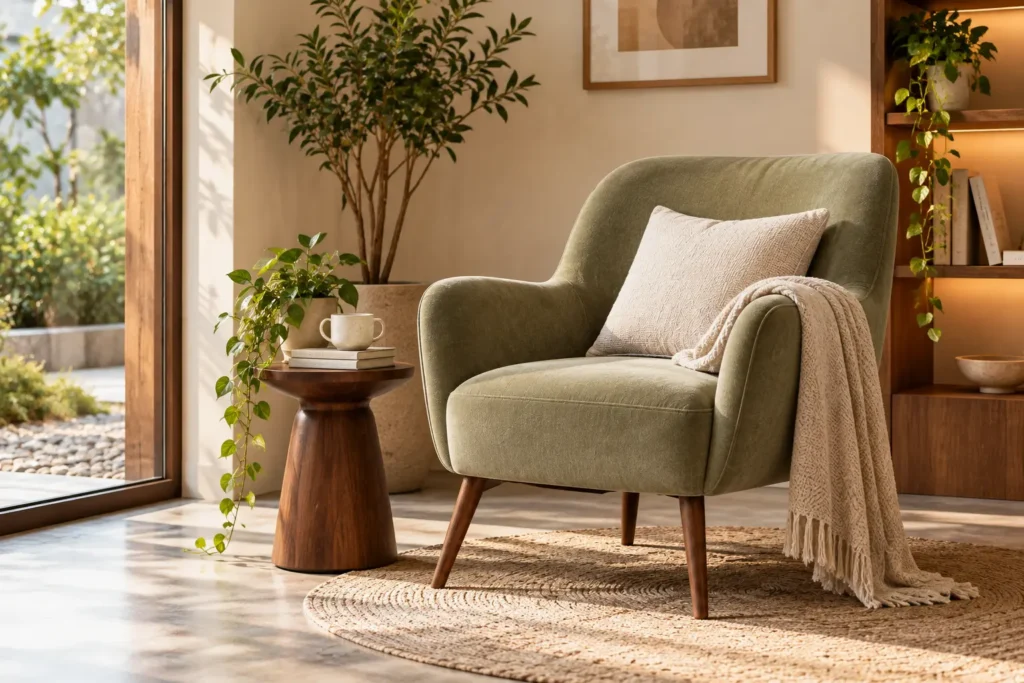
Can an Accent Chair Be Used as a Living Room Chair?
Absolutely.
The better question is whether that particular accent chair is suitable for the way you intend to use it as primary living room chairs.
For example, if you regularly sit in the living room for an hour or two while reading, talking to family or watching television, you should look for a chair with proper back support, comfortable seat depth and suitable cushioning.
If the chair is mainly going to be used when guests visit, you have more flexibility with the design.
Here is a simple way to think about it:
| How you will use the chair | What to prioritise |
| Occasional guest seating | Overall comfort and appearance |
| Daily sitting | Cushioning, back support and seat depth |
| Reading | Back support and arm support |
| Watching television | Deeper seat and relaxed posture |
| Conversations | Upright posture and easy movement |
| Decorative corner | Shape, material and visual character |
This is why choosing an accent chair purely because it looks good can sometimes lead to disappointment.
Accent Chair vs Regular Living Room Chair
There is actually no strict technical boundary between the two.
A chair can be called an accent chair because of its design, while still functioning perfectly well as everyday living room chairs.
The difference is usually more about how the chair is designed and how you intend to use it. A conventional living room chair may prioritise comfort and everyday use, while an accent chair may put more emphasis on creating a distinct visual element within the room. If you are debating between an accent piece and a single-seater sofa, read our guide on which single sofa design is best for your living room.
But these two things do not have to be separate. A good accent chair can provide both.
What Makes an Accent Chair Comfortable Enough for Everyday Use?
If you intend to use the chair regularly, pay attention to a few things that are easy to overlook.
1. Seat depth
A very shallow seat can feel upright and formal. A deeper seat can allow a more relaxed sitting position. Neither is automatically better. Your height and preferred sitting posture matter. Someone who likes sitting upright may prefer a different seat depth from someone who likes to curl up with a book.
2. Back support
Look at where the back of the chair supports you. A beautifully shaped chair can still become uncomfortable if your back is not properly supported. If possible, sit in the actual chair before buying it. Spend a few minutes in it rather than simply sitting down for a few seconds.
3. Seat cushioning
The softness of the cushion is not the only measure of comfort. A very soft chair may feel comfortable initially but may not provide the support you want during longer periods of sitting. The balance between cushioning, support and the underlying construction matters more than simply choosing the softest seat.
4. Armrests
Armrests can make a surprisingly large difference if the chair is going to be used regularly. They give your arms somewhere to rest and can make conversations or reading more comfortable. However, chairs without arms can sometimes feel lighter and occupy less visual space.
5. Chair height
The relationship between the seat height, your legs and the rest of your furniture matters. A chair that is too low or too high compared with the sofa and table around it can feel awkward even if the chair itself is comfortable.
Should You Buy Two Accent Chairs for the Living Room?
You can.
An accent chair set of 2 can work particularly well when you want to create a balanced seating arrangement. For example, two chairs can face a sofa, sit beside a coffee table or be positioned opposite each other for conversation.
But buying two identical chairs is not always necessary.
You could also use two chairs with similar proportions but different upholstery or detailing. This can create a more relaxed look while still making the room feel coordinated.
The decision should depend on the size and layout of your living room. Do not buy two chairs simply because a set looks good in a showroom. Measure the room first.
How Many Accent Chairs Does a Living Room Need?
There is no fixed number.
A smaller living room may work well with one chair alongside a sofa. A larger room could accommodate two chairs, particularly if you want to create a separate conversation area.
The biggest mistake is trying to maximise the number of seats without considering movement. A living room should still have comfortable circulation around the furniture. One properly sized chair can be more useful than two oversized chairs that make the room feel crowded.
Can You Use a Custom Accent Chair in a Living Room?
Yes, and this can make sense when standard sizes available in designer furniture stores in bangalore or online do not work well with your space.
For example, you may have a narrow living room, an unusual corner, or a specific seating height that you prefer. Investing in a custom accent chair allows you to choose the upholstery, dimensions, arm style, back shape, and other details according to the room. To understand the broader benefits of bespoke furniture, read what is custom made furniture and why it’s totally worth it.
This is particularly useful when you already have a custom made sofa or unique seating and want the new chair to complement it without looking like an exact matching set.
At Suhaus, a leading customized furniture manufacturer in bangalore, custom furniture is one of the ways customers can approach this problem. Instead of starting with a fixed chair size, a custom chair can be designed alongside the room, existing furniture, and the way you intend to use it.
What About Accent Chairs in Small Living Rooms?
This is where accent chairs can be particularly useful.
A large sofa may dominate a compact room, while a single chair can provide another seat without taking up as much visual space. But compact does not automatically mean small. A chair with broad arms, a deep seat or a large rounded back can still occupy considerable space. For specific space-saving options, take a look at our list of top compact accent chairs for living rooms.
Before buying, evaluate different chair designs and measure:
- The width of the chair
- The overall depth
- The height
- The space needed to move around it
- The distance from nearby tables
- The path between the chair and other furniture
Also remember to check whether the chair can actually reach the room through your doorway, staircase or lift.
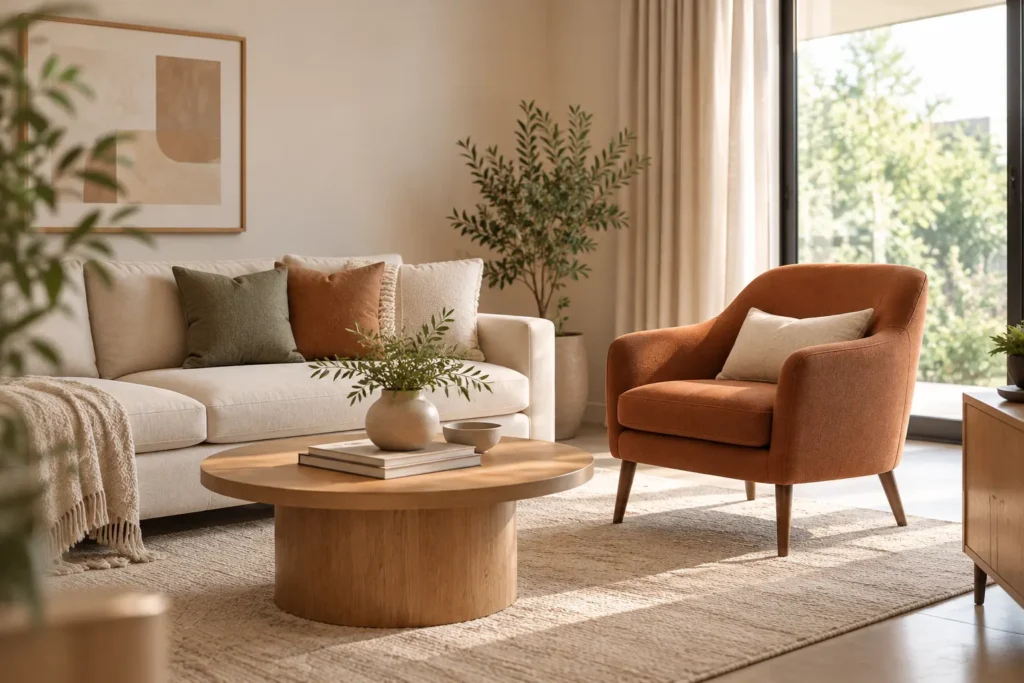
Things to Check Before Buying an Accent Chair
Before choosing one for your living room, ask yourself:
Will I actually sit in it regularly?
If yes, prioritise comfort over appearance.
How much space do I have?
Measure the available area rather than estimating it visually.
Does it work with my sofa?
It does not need to match exactly. Similar proportions, colours or materials can be enough to make the arrangement feel intentional.
Will the chair be used for long periods?
If yes, pay more attention to seat depth, cushioning and back support.
Do I need one chair or two?
Decide based on the room layout rather than buying a set simply because it is offered together.
Can I customize the size?
If standard chairs do not fit the space properly, a custom chair may be worth considering.
For a broader evaluation checklist before purchasing any major furniture item, review our guide: before you buy furniture, ask these 10 questions.
Common Mistake: Choosing the Chair Only for Its Looks
This is probably the biggest trap with accent chairs.
Because they are often visually distinctive, it is easy to focus on an attractive accent chair design, fabric or colour and forget that the chair is still furniture that someone has to sit on. A chair can look fantastic in a photograph and feel completely wrong once you spend twenty minutes sitting in it.
The opposite can also happen. A relatively simple chair can become one of the most used pieces of furniture in the room because it is genuinely comfortable. The best accent chair is not necessarily the one that attracts your attention first. It is the one that works with both the room and the way you live.
The Takeaway
Accent chairs can absolutely be used as living room chairs. The word “accent” does not mean that the chair is only decorative. It simply means the chair can play a distinctive role within the room.
If it is going to be used every day, judge it like any other important piece of seating. Check the dimensions, seat depth, back support, cushioning and overall construction. Then consider how it fits with your sofa, coffee table and circulation space. And if a standard chair does not fit your room or the way you sit, partnering with trusted furniture manufacturers in bangalore for customisation can be well worth considering.
The simplest test is also the most useful one: Sit in the chair before you decide. A living room chair has to work in real life, not just look good in a photograph.
Questions People Often Ask
1. Are accent chairs comfortable?
They can be. Comfort depends on the chair’s dimensions, cushioning, back support and construction rather than the fact that it is called an accent chair.
2. Can an accent chair replace a sofa?
Usually, no. An accent chair is better thought of as individual seating. However, several suitable chairs can be used to create a seating arrangement without a traditional sofa.
3. Should accent chairs match the sofa?
Not necessarily. They can match, complement or deliberately contrast with the sofa. What matters is that the overall combination feels intentional.
4. Are two accent chairs better than one?
Not always. Two chairs work well when the room has enough space and the layout benefits from symmetrical or conversational seating.
5. Can I get a custom accent chair?
Yes. Customisation can be useful when you have specific space, comfort, size or upholstery requirements that standard chairs do not address.