Imported Sofa vs Custom Made Sofa: What Should You Know Before Buying?
You walk into a furniture showroom, spot a sofa you like, and discover that it costs considerably less than you expected. It looks good, is available immediately, and you can take it home without waiting for manufacturing. It is tempting to make the decision right there.
But have you considered what is inside the sofa? Do you know what material the frame is made from, what kind of cushioning it uses, or whether you will be able to get it repaired a few years later? To understand what goes into a sofa’s interior frame and support before buying, read our guide on how to know what is inside a sofa before you buy it.
These questions matter because a sofa’s appearance and price do not tell you everything about how it is made or how it may perform over time.
In Bangalore, customers can find finished sofas imported from overseas, including China, alongside sofas manufactured locally and made to order. Both options have their place. An imported sofa may be convenient and affordable, while a custom sofa offers more flexibility over its dimensions, materials and construction. When evaluating an imported sofa vs custom made sofa, understanding your priorities is key.
The challenge is knowing what you are comparing. Let’s look at the differences, what buyers should check, and when each option makes sense.
1. What Is the Difference Between an Imported Sofa and a Custom Made Sofa?
The first thing to understand is that these terms describe different aspects of a sofa. An imported sofa is brought into the country from another market. It may arrive as a finished product, ready for sale, with its dimensions, materials and design already decided.
A custom made sofa is manufactured according to the customer’s requirements. Depending on the manufacturer, these requirements may include the dimensions, upholstery, cushioning, configuration, design and construction details.
There is also an important distinction between buying a ready made sofa manufactured in India and buying a custom sofa. When weighing a ready made sofa vs custom made sofa, the first may be locally manufactured but still come in fixed specifications.
Here is a simple comparison.
| Factor | Imported ready made sofa | Custom made sofa |
| Availability | May be available for immediate delivery if in stock | Requires manufacturing time |
| Dimensions | Usually fixed | Can often be adjusted to suit the room |
| Fabric and colour | Limited to available options | More choice, depending on the manufacturer |
| Comfort | Must generally be accepted as supplied | Comfort can be discussed and specified |
| Internal materials | Need to be verified with the seller | Can be discussed before manufacturing, depending on the maker |
| Construction visibility | The finished product may conceal the frame and joints | Some manufacturers allow inspection before upholstery |
| Repairs and spare parts | Depend on the seller and availability of components | May be easier to arrange with the manufacturer, but this should be confirmed |
| Price | Can be attractive, especially for discounted stock | Depends on materials, design, dimensions and workmanship |
| Delivery | Potentially faster when available locally | Depends on the production schedule and delivery arrangements |
Neither option automatically guarantees better quality. The difference lies in the specifications, transparency, flexibility and support you can establish before buying.
2. Why Are Some Imported Sofas So Cheap?
This is one of the first questions worth asking when you see a sofa priced significantly below similar looking products. To understand how pricing correlates with structural quality, read our analysis on why some furniture can be so cheap.
There is no single explanation for a low price. Some imported sofas benefit from large production volumes, standardised designs and economies of scale. Others may be offered at discounted prices because a seller is clearing existing stock.
In a stock clearance situation, a seller may be more interested in moving available inventory than manufacturing another batch. That can create genuine opportunities for buyers looking for an immediate purchase.
However, a low price alone does not tell you whether the sofa represents good value. See our guide on how to compare furniture prices without comparing only the price.
Two sofas can look almost identical in a photograph while differing in their frame materials, internal support, cushioning, upholstery and construction.
Consider two sofas with similar dimensions and colours. One has a clearly specified wooden frame and cushioning, while the other is sold with very little information about its internal materials. Comparing only their selling prices ignores a potentially important difference.
The problem is not that the cheaper sofa must be poor quality. It is that the buyer has insufficient information to make a meaningful comparison.
Before deciding, ask what explains the price difference. Is it a clearance offer, a difference in materials, a simpler construction, a different specification, or simply a different business model? If the seller cannot explain the difference clearly, treat that as a reason to investigate further.
3. The Biggest Question: What Is Inside the Sofa?
A sofa is more than its fabric, colour and shape. Much of its performance depends on components you cannot see once the product is finished. These include the frame, joints, reinforcement, suspension and cushioning.
The upholstery covers much of this construction, which makes it difficult for an ordinary buyer to assess the internal materials by looking at a completed sofa.
What if the seller says the sofa has a teak frame?
Teak is a recognisable and valuable timber, so a claim that a sofa has a teak frame may influence a customer’s decision. For context on wood species and durability, check our buyer’s guide on the best woods for making wooden furniture in India.
But how can you verify that claim?
You generally cannot establish the species of wood throughout a finished, upholstered sofa just by looking at its exterior. A salesperson’s verbal assurance is not the same as a clear material specification. Read our article on whether you can really tell what wood is used after furniture is polished.
Ask the seller to identify the wood species in writing. Clarify which components use that wood and whether other materials are used elsewhere in the frame.
This distinction matters because a product may contain different materials in different structural components. Knowing exactly what is being claimed is more useful than relying on a broad label such as wooden sofa. The same principle applies to cushioning, suspension and other internal components.
Why construction matters
Two sofas can look similar when new but respond differently to regular use. For testing tips before buying, see our 8-step guide on how to check a wooden sofa before buying.
The way a frame is assembled, the quality of its joints, the support beneath the cushions and the suitability of the cushioning all influence how the sofa performs.
A photograph cannot establish these things. Nor does a heavy sofa automatically indicate good construction.
If the internal construction matters to your purchase, ask how you can verify it before paying.
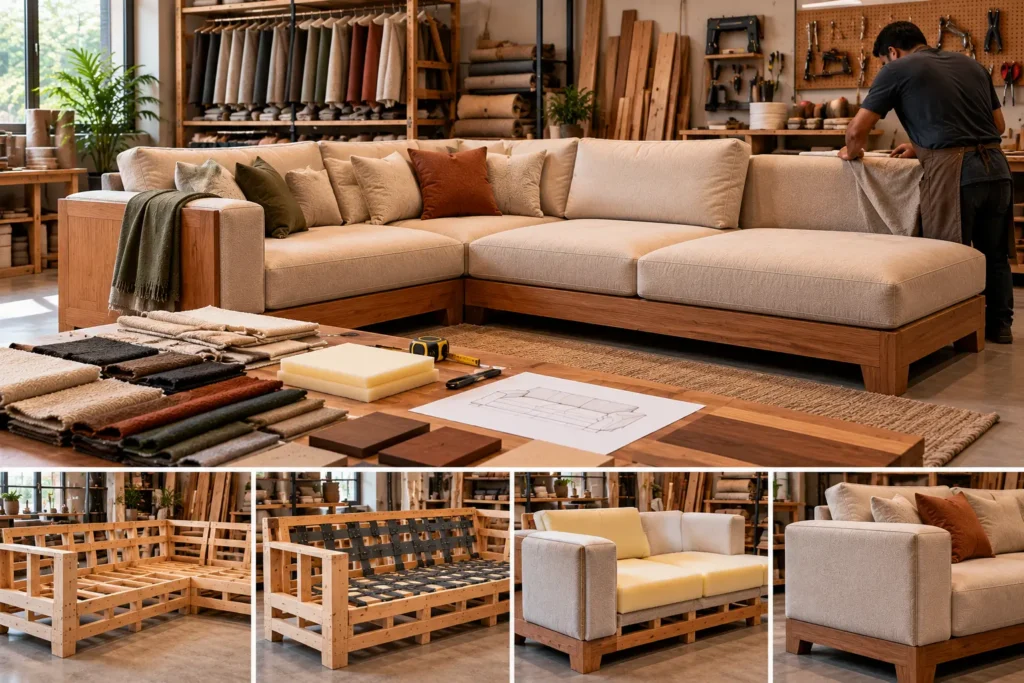
At Suhaus, a recognized sofa manufacturer in bangalore, customers can visit the factory and inspect their own sofa’s frame, materials, joints and reinforcement before upholstery conceals them. This offers a clearer view of how the product is being made. It does not remove the need for appropriate materials, workmanship and quality checks, but it gives customers an opportunity to ask informed questions during manufacturing.
4. Does a Sofa That Looks Good Today Stay That Way?
This is where the difference between appearance and long term performance becomes important. To understand structural wear, read our post on why a sofa becomes uncomfortable after a few years.
A sofa may look excellent when displayed in a showroom. Its upholstery may be neatly finished, the cushions may appear full, and the overall design may look very similar to a more expensive model.
But the appearance of a new sofa cannot tell you everything about how its materials will behave after months or years of use. For details on fabric degradation, see why sofa fabric peels, sags or wears out quickly.
For example, upholstery made from artificial leather can peel or crack over time. The risk depends on the particular material, its quality, the conditions in which it is used and how it is maintained. Peeling is not exclusive to imported sofas, nor does it happen to every artificial leather product. If you prefer genuine leather or fabric options, see our comparison on leather sofa vs fabric sofa.
Similarly, cushions can lose their shape, support can change and joints can loosen depending on the materials, construction and usage. These are concerns worth investigating when buying any sofa, regardless of where it was manufactured.
Before buying, ask:
- What exactly is the upholstery material?
- Is it genuine leather, artificial leather or fabric?
- What information is available about the cushioning?
- What is the frame made from?
- What warranty applies to the upholstery and internal construction?
- What happens if the material starts peeling or the cushioning loses support?
Do not rely on descriptions such as leather finish or premium fabric without clarifying the actual material.
If possible, examine a material sample and ask about its care requirements and warranty exclusions. A sample can help you understand its appearance and feel, although it cannot prove how the entire sofa will perform over time.
5. Why Customisation Matters More Than You Might Think
Imagine that you find a sofa you like, but it is slightly too deep for your living room. You also prefer firmer cushions and a different fabric. To choose proportions accurately, see our guide on how to choose the right sofa size for your living room.
With a finished, ready made sofa, you generally have to accept the available specifications. Some sellers may offer modifications, but you should not assume these are possible. With custom made furniture, you can discuss the changes before manufacturing begins.
Depending on the design and manufacturer, these may include:
- Adjusting the width and depth.
- Choosing a different fabric or upholstery material.
- Discussing cushion firmness and support.
- Changing the configuration from a straight sofa to an L shaped arrangement.
- Adjusting the armrests, backrest or other design details like adding a custom accent chair.
- Planning separate sections to simplify delivery into an apartment.
This flexibility can be particularly useful in Bangalore apartments, where room dimensions, narrow passages and lift sizes may limit your options. For more space-saving ideas, see space-saving furniture options for small apartments in bangalore.
However, customisation is not unlimited. Changing dimensions can affect the proportions, comfort and construction of a design. Some changes may also increase the price or manufacturing time. The point is not to customise everything. It is to have the option to change what matters to you.
6. What Happens When Your Sofa Needs Repair?
This is an important consideration that is easy to overlook when buying new furniture. When you purchase a finished imported sofa, the seller may or may not have access to replacement components, technical documentation or a local repair arrangement. The level of support varies between businesses, so it is worth checking rather than assuming.
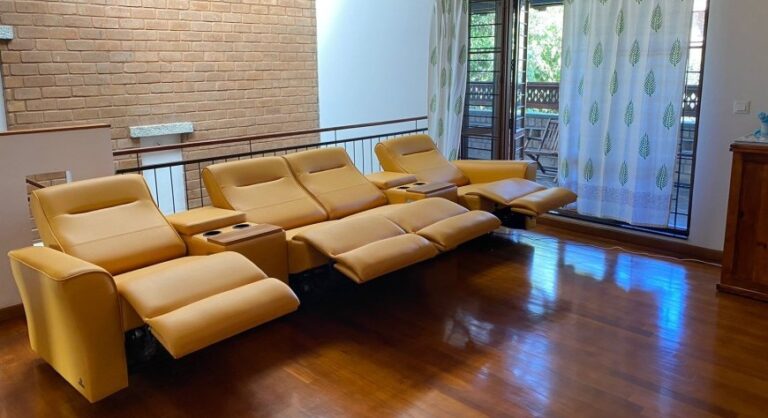
For example, if a reclining mechanism on a recliner sofa develops a problem, can the seller source a compatible replacement? If the upholstery needs repair, is there a service arrangement? If a component breaks, who is responsible for resolving the issue?
These questions become especially relevant when the original product is no longer available. A locally manufactured sofa is not automatically easier to repair, either. That depends on the manufacturer’s willingness to provide service, the construction of the product and the availability of materials or parts.
The advantage of working directly with custom sofa makers or a furniture manufacturing company in bangalore can be that you know whom to contact about the product and can discuss the construction and repair requirements with the people responsible for making it. Before paying, ask the seller to explain the after sales process in practical terms.
Who do you contact? What does the warranty cover? Are repairs carried out locally? Are replacement parts available? What costs might you have to pay? A warranty is useful, but understanding how service actually works is equally important.
7. Is Imported Furniture Always Cheaper Than Custom Made Furniture?
Not necessarily. An imported ready made sofa may have a lower selling price because of its standardised specifications, production volumes or a stock clearance offer. A custom made sofa may cost more because of its materials, construction, design requirements and manufacturing effort.
But these are general possibilities, not rules. An imported sofa can be expensive, and a locally manufactured customised sofa in bangalore can be affordable. A custom made product does not automatically justify a higher price, just as a discounted product does not automatically represent a bargain.
The more useful approach is to compare the specifications.
| What to compare | Why it matters |
| Frame materials | Establish what the structure is made from |
| Cushioning | Compare the actual material and support specifications |
| Upholstery | Confirm the material rather than relying on appearance |
| Dimensions | Ensure you are comparing products of a similar size |
| Construction | Ask about joints, reinforcement and internal support |
| Customisation | Check whether the price includes the changes you need |
| Delivery and installation | Understand the total cost of getting the sofa into your home |
| Warranty and service | Compare the actual coverage and repair arrangements |
If one sofa costs less but offers different materials, dimensions or service, the two prices are not directly comparable.
The cheapest sofa may be the right choice for you. But you should know what you are gaining and what you may be giving up to get that price.
8. What If You Need a Sofa Immediately?
This is one area where ready made imported furniture can have a genuine advantage. If you are moving into a new home, have guests arriving or need to furnish a rental property quickly, an available sofa can solve an immediate problem.
Custom manufacturing takes time, and that time needs to fit your schedule. The question is whether the convenience of buying immediately outweighs the benefits of choosing your own specifications.
Consider the following situations.
| Your situation | What may make more sense |
| You need a sofa immediately | A ready made sofa that fits your space and requirements |
| You have a fixed budget and straightforward needs | Compare ready made options with clearly specified materials |
| Your living room has unusual dimensions | A custom made sofa from custom sofa manufacturers in Bangalore may offer more flexibility |
| You have specific comfort requirements | Look for a product you can test or whose cushioning can be specified |
| You want to inspect the internal construction | Consider a manufacturer that allows inspection before upholstery |
| You want a particular design adapted to your home | Custom manufacturing from custom furniture makers bangalore may be more suitable |
| You are furnishing a short term rental | A practical ready made option may be sufficient, depending on expected use |
There is no need to spend more on custom furniture if you do not need the flexibility it offers.
Equally, rushing into a purchase because a sofa is available immediately can become expensive if it does not suit your room, comfort requirements or expectations. Read our guide on custom wooden sofa design vs ready-made for a deeper comparison. The best decision depends on your priorities.
9. How to Check a Sofa Before You Buy It
Whether you choose an imported sofa or a custom made one, use these checks before placing an order.
Check the materials
Ask for written details of the frame, cushioning, upholstery and other important components. If the seller claims the frame is teak, ask which parts are teak and have that specification documented.
Test the comfort
Sit on the sofa rather than judging it by appearance alone. Check the seat depth, back support, cushion firmness and seating height.
Check the dimensions
Measure your living room and confirm the sofa’s width, depth and height. Also consider walking space, nearby furniture and whether the sofa can pass through the doorway, staircase or apartment lift.
Understand the construction
Ask whether you can inspect the frame and internal support. If the product is already finished, request whatever construction information or documentation the seller can reasonably provide.
Clarify the warranty
Read what is covered, how long the coverage lasts and what exclusions apply. Ask who handles repairs and whether replacement components are available.
Confirm the delivery arrangements
Check the expected delivery date, installation requirements and what happens if the sofa cannot be brought into your home.
Get the specifications in writing
Keep a written record of the dimensions, materials, upholstery, configuration, price, delivery commitments and warranty terms. For a detailed breakdown of documentation, see our guide on what should be included in a furniture quotation.
This is particularly important when the purchase involves a substantial advance payment.
10. What Should You Ask Before Paying for an Imported Sofa?
If you are considering an imported ready made sofa, these questions can help you make a more informed decision.
- Where was this sofa manufactured?
- Is it being sold exactly as imported, or has it been modified or assembled locally?
- What material is used for the frame, and can you provide that specification in writing?
- What are the actual upholstery and cushioning materials?
- Is the displayed price a regular selling price or a stock clearance offer?
- Is the exact model available for inspection?
- What warranty applies to the frame, cushioning, upholstery and mechanisms?
- Who will handle repairs if something goes wrong?
- Are compatible replacement components available?
- Can the sofa be delivered through my doorway, staircase or apartment lift?
A seller who can answer these questions clearly gives you a better basis for making a decision.
Not every seller will have every technical detail available, but the more important a specification is to your purchase, the more carefully you should verify it.
The Takeaway
An imported sofa can be convenient, affordable and perfectly suitable for your home. A custom made sofa can offer more control over dimensions, comfort, materials and design. Neither is automatically the better choice. When deciding between an imported sofa vs custom made sofa, the key is evaluating how well each matches your layout and lifestyle.
The mistake is comparing them only by appearance and price. Before you buy, find out what is inside the sofa, whether its specifications can be verified, how it will fit your home and who will help if something needs repair.
If immediate availability is your priority, a ready made sofa may make sense. If you have specific requirements or want greater visibility into the manufacturing process, consider working with a customized home furniture manufacturer in bangalore that allows you to discuss and inspect the product before it is finished.
At Suhaus, customers can visit the factory and inspect their sofa’s frame and construction before upholstery, while discussing dimensions, materials, comfort and configuration. As leading custom furniture makers bangalore homeowners rely on, this gives them an opportunity to understand what is being made for them rather than relying entirely on the finished appearance.
Buy the sofa that meets your needs, but make sure you understand what you are paying for.
Frequently Asked Questions
1. Are imported sofas from China bad quality?
No. Quality varies by manufacturer, materials, construction and price point. The country of origin alone does not establish whether a sofa is good or bad. Buyers should assess the actual specifications, workmanship, warranty and service arrangements.
2. Why are some imported sofas sold at very low prices?
Possible reasons include production volumes, standardised designs, promotional pricing and stock clearance. A low price does not automatically indicate poor quality, but buyers should understand the materials and specifications before comparing it with another sofa.
3. Is a custom made sofa more durable?
Not automatically. Durability depends on the materials, construction, workmanship, usage and maintenance. Custom manufacturing gives you an opportunity to discuss the specifications, but it does not guarantee a better result.
4. Can I verify the wood used inside a finished sofa?
It can be difficult to verify the wood species throughout a fully upholstered sofa by visual inspection alone. Ask for the material specification in writing and clarify which components use the stated wood. Where possible, inspect the frame before upholstery.
5. Do imported sofas have after sales service in India?
Some sellers provide local service and replacement components, while others may offer more limited support. Ask the specific seller about repairs, warranty coverage and the availability of compatible parts before buying.
6. Is it better to buy a ready made or custom made sofa?
A ready made sofa can be suitable when you need something quickly and the available dimensions, comfort and materials meet your requirements. Custom manufacturing can be useful when you want greater control over dimensions, design, upholstery or comfort. The right choice depends on your needs rather than the label.